
🇰🇷 South Korea · Korea (the restaurant form was popularised abroad by Korean restaurants in Los Angeles from the 1980s)
Sundubu jjigaeKorean soft tofu stew
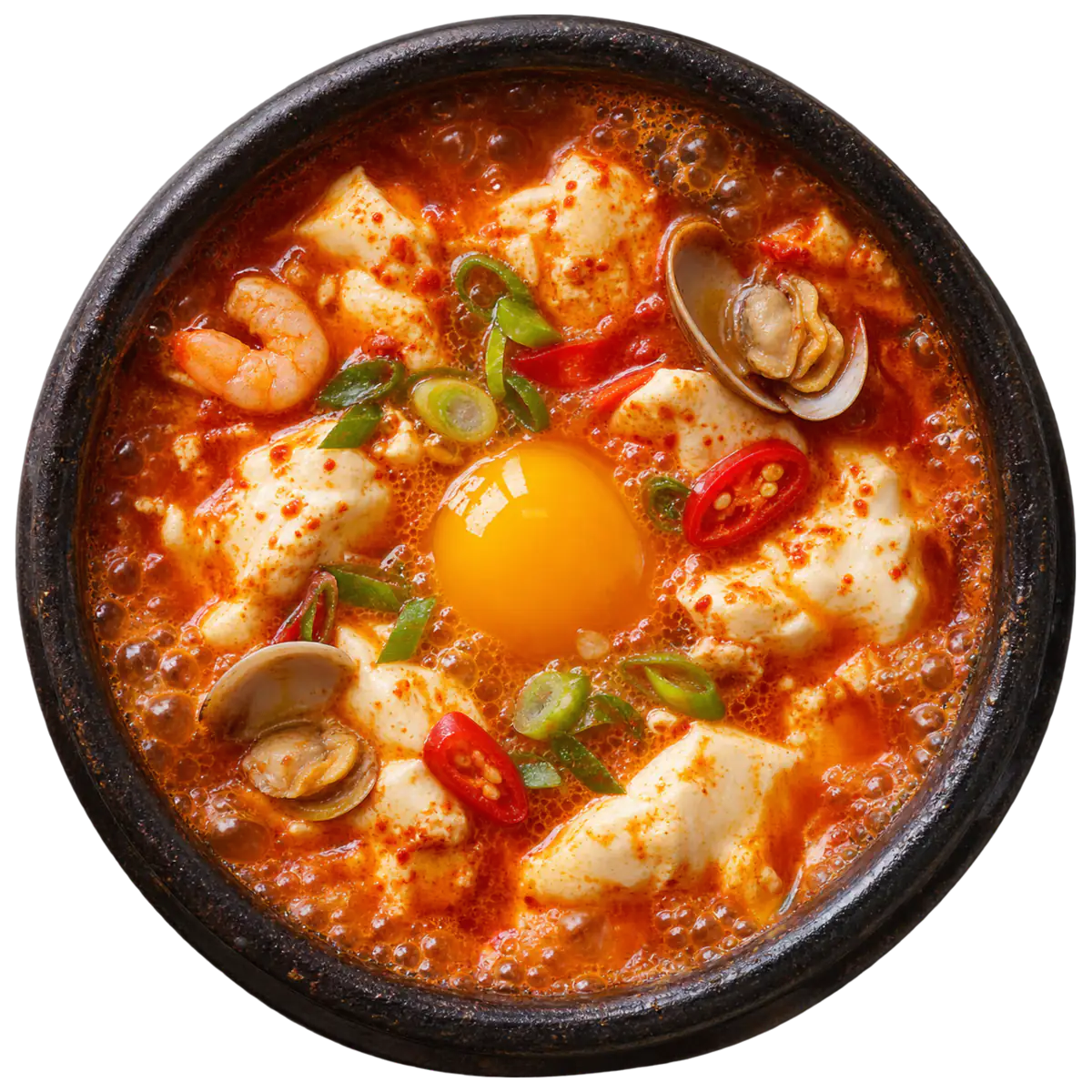
A spicy Korean soup-stew of unpressed soft tofu (sundubu) in a chili-red stock of anchovy and kelp with clams or pork, finished with a raw egg and served bubbling in an earthenware pot with rice.
Origin and history
Sundubu is the soft tofu curd taken before it is pressed. The Encyclopedia of Korean Culture says there is no specific early record of sundubu itself, but notes that the late-Goryeo writer Yi Saek mentions tofu soup and the Joseon writer Yi Ik describes cooking with tofu and soybean residue, so it was probably used alongside them. The stew is described there as a soft, easily digested delicacy; the spicy, kimchi-and-gochugaru form is the one now served in tofu restaurants.
Make it at home
- Makes
- 4 servings
- Total time
- 40 min
- Hands-on
- 20 min
Ingredients
- 15 g1/2 oz dried anchovies, heads and guts removed
- 1 piece dried kelp (dasima), about 5 cm (2 in) square
- 900 ml3 3/4 cups water, for the stock
- 2 tbsp neutral oil or sesame oil
- 100 g3 1/2 oz pork shoulder or belly, thinly sliced; optional
- 1/2 cup sour kimchi, chopped, optional
- 2 tbsp gochugaru, to taste
- 1 tbsp minced garlic
- 300 g10 oz clams in the shell, scrubbed and purged in salted water; or 4 shrimp
- 2 x 350 g2 x 12 oz tubes of sundubu (soft unpressed tofu)
- 1 tbsp soup soy sauce or salted shrimp (saeujeot), to taste
- 1 tsp toasted sesame oil
- 2 scallions, sliced
- 4 eggs, raw, one for each pot
- salt, black pepper, steamed rice, to taste and to serve
Method
-
1. Simmer the anchovies and kelp in the water for 15 minutes, then strain; you want about 700 ml (3 cups) of stock.
-
2. Heat the oil in a heavy pot (or divide into four small earthenware pots) over medium heat, add the pork and kimchi and cook 3 minutes.
-
3. Stir in the gochugaru and garlic for 30 seconds, until fragrant and the oil is red, without letting it burn.
-
4. Add the stock, bring to a boil, add the clams and cook until they open, about 3 to 4 minutes; discard any that stay shut.
-
5. Spoon in the tofu in large chunks; do not stir hard, so it stays in soft curds. Season with the soy sauce or salted shrimp and simmer 3 to 5 minutes.
-
6. Add the sesame oil and scallions, and bring to the table still bubbling.
-
7. Crack a raw egg into each pot at the table, let the heat cook it a little, and eat with rice.
Notes
- Sundubu is tofu curd before it is pressed, so it is soft and wobbly and breaks into the broth. Soft silken tofu is a substitute with a slightly different texture.
- Clams, shrimp, squid, pork, beef or mushrooms are all used; kimchi is a common addition. Soy sauce alone can discolour the tofu, and salted shrimp (saeujeot) firms it, which is why the encyclopedia pairs the two for seasoning.
- Related: kimchi jjigae and doenjang jjigae. Serve in a ttukbaegi so it keeps bubbling.
Adapted from Taste Korean Food, Seafood Soft Tofu Stew, Daebak, Sundubu Jjigae, and Encyclopedia of Korean Culture (한국민족문화대백과사전), 순두부찌개.
At the festivals
No festival we list has printed it on a menu yet.