
🇰🇷 South Korea · Korea
Doenjang jjigaeKorean soybean paste stew
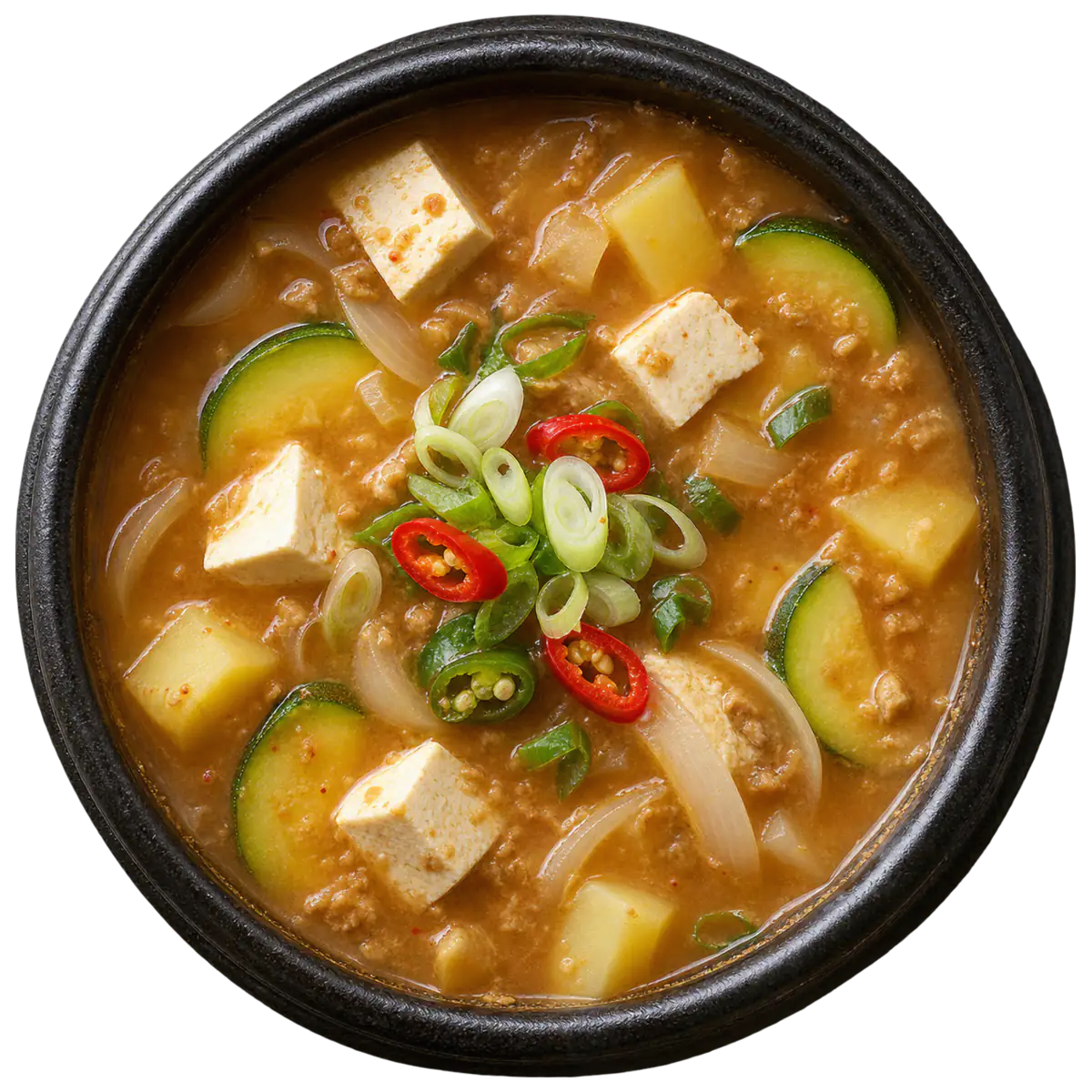
A savory Korean soup-stew of fermented soybean paste (doenjang) dissolved in anchovy and kelp stock or rice water, with tofu, zucchini, potato and onion, simmered and served in an earthenware pot with rice.
Origin and history
Doenjang jjigae, also called tojang jjigae, is jjigae boiled with doenjang and vegetables, tofu, seafood or meat, with the vegetables changing by season: green chilies in summer, mushrooms in autumn, dried radish greens in winter. The Encyclopedia of Korean Culture says doenjang has long been a basic Korean food, that the word jjigae first appears as jochi in the Siuijeonseo, and that it is unclear when jjigae split from guk. It is everyday home food eaten with rice.
Make it at home
- Makes
- 4 servings
- Total time
- 35 min
- Hands-on
- 15 min
Ingredients
- 15 g1/2 oz dried anchovies, heads and guts removed (a good handful)
- 1 piece dried kelp (dasima), about 5 cm (2 in) square
- 750 ml3 cups rice-rinse water, from the second or third rinse; plain water also works
- 3 tbsp doenjang (fermented soybean paste), adjust to the brand's saltiness
- 1/2 tsp gochugaru, optional
- 1 small zucchini, halved and cut in half-moons
- 1 small potato, peeled, cut in small chunks
- 1/2 onion, cut in chunks
- 200 g7 oz firm tofu, cut in 2 cm (3/4 in) cubes
- 2 tsp minced garlic
- 1 green chili, sliced, optional
- 1 scallion, sliced
Method
-
1. Simmer the anchovies and kelp in the rice water for 10 minutes, then remove and discard them.
-
2. Dissolve the doenjang in the hot stock by pressing it against a sieve or the pot wall with a spoon.
-
3. Add the potato and onion and boil over medium-high heat for 5 minutes.
-
4. Add the zucchini and boil 5 minutes, then the tofu for another 3 to 5 minutes, until the potato is just tender.
-
5. Add the garlic, chili and scallion, simmer 2 minutes, then taste and adjust with a little more doenjang if needed.
-
6. Sprinkle with gochugaru and serve bubbling hot, with rice and kimchi.
Notes
- Rice-rinse water gives a slightly thick, rounder broth. Add the garlic late, as long cooking can make it bitter.
- Beef, pork, clams or other seafood are added in many homes; radish, mushrooms, chilies and, in season, dried radish greens (siraegi) are common too. Where doenjang is strong, skip the onion.
- Use Korean doenjang; the taste is less pungent than the smell suggests. Cooks wary of its strength sometimes dilute it with a little mild miso, which makes the soup sweeter and rounder. Some also add a spoon of gochujang.
- Traditionally served in a ttukbaegi (earthenware pot) as everyday food. Related: kimchi jjigae and sundubu jjigae.
Adapted from Kimchimari, Doenjang Jjigae, Hungry Huy, Doenjang Jjigae, and Encyclopedia of Korean Culture (한국민족문화대백과사전), 된장찌개.
At the festivals
No festival we list has printed it on a menu yet.