
🇰🇷 South Korea · Korea
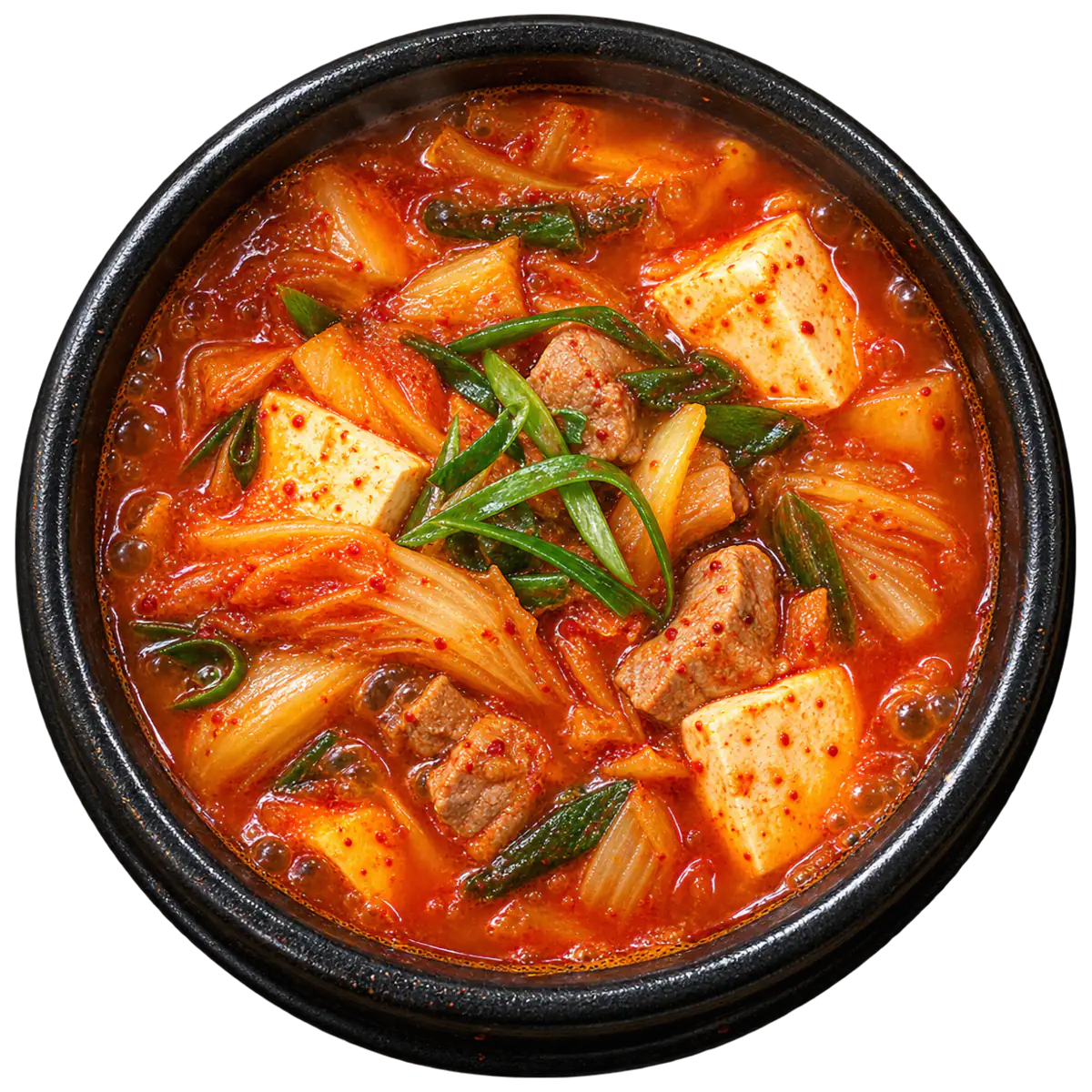
Kimchi jjigaeKorean kimchi stew
A bubbling, spicy Korean soup-stew of well-aged sour kimchi simmered with fatty pork and tofu in stock or kimchi juice, seasoned with gochugaru, and eaten from the pot with rice.
Origin and history
Kimchi jjigae is built on well-fermented sour kimchi. The Encyclopedia of Korean Culture links it to ways of using kimchi that had gone sour or that people did not want to eat raw, and infers that it began once chili-based kimchi was being made, after chili peppers arrived in the mid-Joseon period. It records a palace-kitchen name, kimchi-jochi; another entry says jjigae were first recorded under the name jochi in the Siuijeonseo. No date for the dish itself is stated.
Make it at home
- Makes
- 4 servings
- Total time
- 45 min
- Hands-on
- 20 min
Ingredients
- 450 g1 lb well-fermented sour kimchi, cut into bite-size pieces, with its juice
- 225 g8 oz fatty pork, belly or shoulder, sliced bite-size
- 1 tbsp toasted sesame oil, or neutral oil
- 1 to 2 tbsp gochugaru (Korean chili flakes), to taste
- 2 tsp minced garlic
- 1 tsp sugar, balances sourness
- 120 ml1/2 cup kimchi juice, from the jar
- 700 ml3 cups anchovy stock or water
- 300 g10 oz firm or medium-firm tofu, sliced about 1 cm (1/2 in) thick
- 2 scallions, sliced
- soy sauce or salt, black pepper, to taste
- steamed rice, to serve
Method
-
1. Heat the oil in a heavy pot over medium-high heat and cook the pork for 2 to 3 minutes until it starts to colour.
-
2. Add the kimchi, gochugaru, garlic and sugar and stir-fry 5 minutes, until the kimchi softens and looks glossy.
-
3. Pour in the kimchi juice and stock, bring to a boil and boil 5 minutes.
-
4. Lower the heat, cover and simmer for 15 to 20 minutes until the pork is tender and the broth has deepened.
-
5. Lay the tofu on top and simmer for 5 minutes more, so it heats through without breaking.
-
6. Season with soy sauce or salt and pepper, scatter the scallions over and serve bubbling, with rice.
Notes
- The kimchi must be properly sour and well fermented; this is the traditional way to use up old kimchi. Fresh kimchi gives a flat soup; if that is all you have, add a splash of rice vinegar.
- Pork belly is most typical; pork ribs are also used, and canned tuna is a common substitute. Anchovy stock can be replaced with water.
- It is brought to the table bubbling and eaten with rice and side dishes. The royal court called it kimchi-jochi. Cooks also make it with pork ribs (pre-boiled until tender) or with canned tuna instead of pork, and some use a soup made from rice-rinse water instead of anchovy stock.
- Related: doenjang jjigae and sundubu jjigae. Make ahead: it keeps a few days in the fridge, but the kimchi's texture changes if frozen.
Adapted from Korean Bapsang, Kimchi Jjigae, Just One Cookbook, Kimchi Chigae, and Encyclopedia of Korean Culture (한국민족문화대백과사전), 김치찌개.
At the festivals
No festival we list has printed it on a menu yet.