
🇻🇳 Vietnam · Hue, the south, Trảng Bàng, Vũng Tàu, Nha Trang forms
Bánh canhVietnamese thick noodle soup
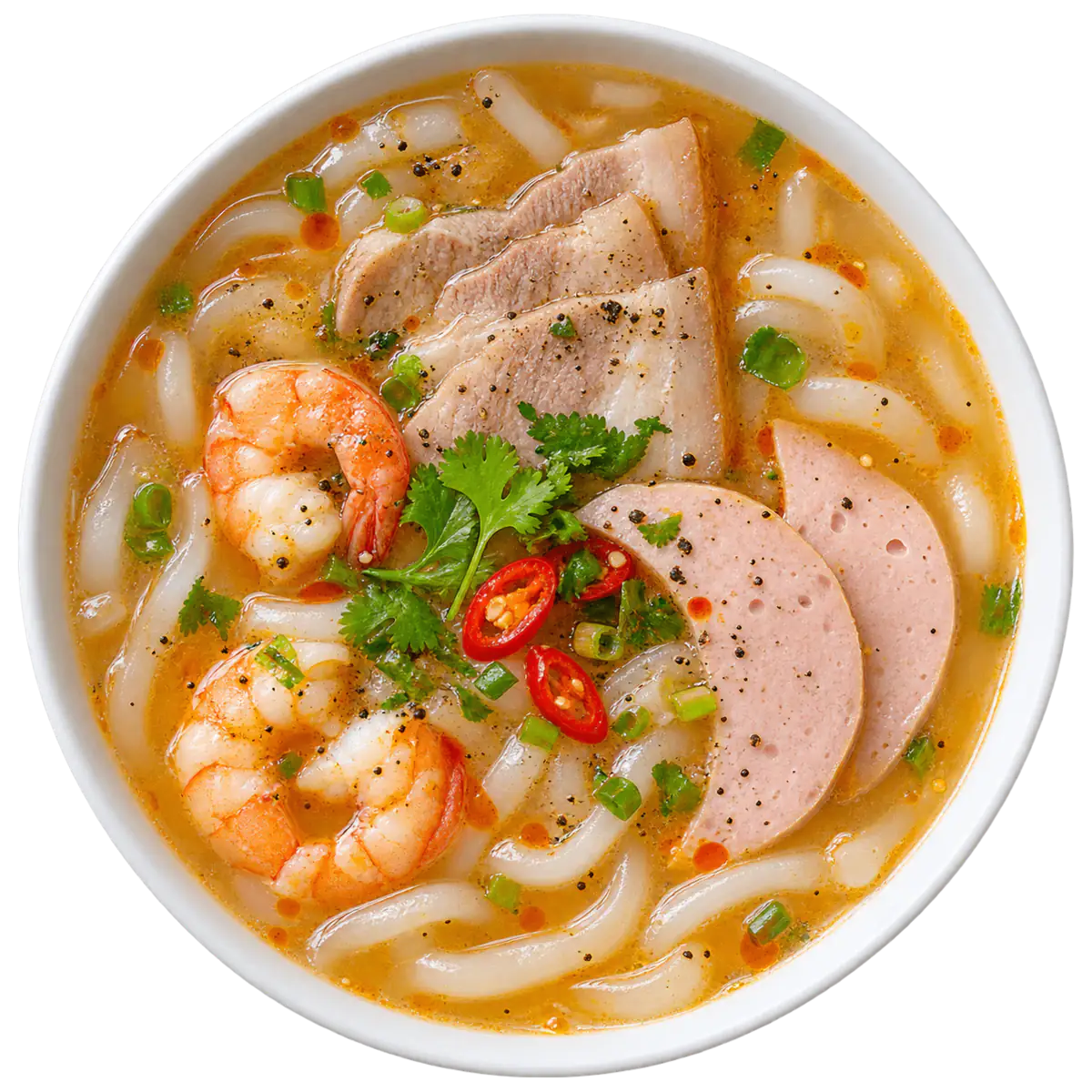
Vietnamese soup of thick, chewy noodles cut from rice flour, tapioca starch or a blend, in a thick broth of crab, fish, shrimp or pork, with crab cakes, quail eggs or pork knuckle.
Origin and history
Bánh canh is a thick-noodle soup found across Vietnam, described by Vietnamese food writers as a humble everyday dish. Regional versions differ in the noodle and the broth: Huế is known for its crab version. The sources fetched give no date or place of origin for the dish.
Make it at home
- Makes
- 4 servings
- Total time
- 1 h 45 min
- Hands-on
- 1 h
Ingredients
- 500 g1 lb 2 oz (about 3 1/2 cups) rice flour (bột gạo), plus extra for dusting
- 100 g3 1/2 oz (about 3/4 cup) tapioca starch (bột năng)
- 425 ml1 3/4 cups boiling water, added gradually
- 1/2 tsp salt, for the dough
- 1 tbsp cooking oil, for the dough
- 700 g1.5 lb pork leg or marrow bones (xương ống heo)
- 2.5 liters2.6 quarts water, for the broth
- 300 g10 1/2 oz pork belly or pork shoulder
- 300 g10 1/2 oz shrimp, peeled and deveined, heads kept
- 200 g7 oz chả lụa or Huế pork sausage, sliced (optional)
- 3 shallots (hành tím), minced
- 2 tbsp annatto oil (dầu điều), or oil colored with annatto seeds
- fish sauce, salt, sugar, black pepper, to taste
- scallion, coriander, red chilli, to serve
Method
-
1. Mix the rice flour, tapioca starch and salt, stir in the boiling water a little at a time with chopsticks, and when it is cool enough to handle knead with the oil for 7 to 10 minutes until smooth.
-
2. Cover the dough with a damp cloth and rest it 15 to 20 minutes.
-
3. Roll the dough 3 to 4 mm (1/8 inch) thick, dust with flour, and cut strips about 5 mm (1/4 inch) wide; add boiling water if the dough cracks, flour if it sticks.
-
4. Blanch the bones for 3 to 5 minutes, rinse, then simmer in the 2.5 liters of water over low heat for about 1 hour, skimming the foam.
-
5. Poach the pork in the broth for 20 to 25 minutes, lift it out and slice thin.
-
6. Fry the shallots with the shrimp heads and annatto oil until the oil turns red, then stir-fry the shrimp bodies with a little fish sauce and pepper.
-
7. Lift out the bones, bring the broth to a rolling boil, drop in the noodles and stir gently; cook 5 to 7 minutes, until they float and the broth turns slightly thick.
-
8. Add the shrimp, season with fish sauce, salt and sugar, and ladle into bowls over the pork and sausage; finish with scallion, coriander, pepper and chilli, and eat at once.
Notes
- Quantities follow a Vietnamese recipe for a Huế-style rice-flour bánh canh for four. Bánh canh is a family of thick-noodle soups across Vietnam; Vietnamese sources list seven regional kinds, differing in noodle (rice flour, tapioca, wheat or a blend) and broth.
- The parent recipe here is the everyday pork-and-shrimp home bowl. In Huế, bánh canh cua is the crab version: the crab is simmered about 2 hours for the broth, a little rice flour thickens it, and balls of crab meat pounded with raw pork paste, shrimp and pork skin are added, along with quail eggs, crisp pork fat, chilli, herbs and pepper.
- Other kinds named in the sources (Trảng Bàng, Nam Phổ, Nha Trang fish cake, western riverlands, Vũng Tàu crab, Huế snakehead) change the noodle or the protein.
- About 800 g of ready-made fresh bánh canh noodles can replace the homemade dough.
- Eat at once: the noodles swell and break up if left in the broth. Uncooked noodles keep a day, or freeze and drop straight into boiling broth.
Adapted from Bánh canh bột gạo Huế, Hoàng Hà Mobile and Bánh canh cua xứ Huế, VnExpress.
At the festivals
No festival we list has printed it on a menu yet.