
🇻🇳 Vietnam · northern origin; eaten across the country
Bún riêuVietnamese crab noodle soup
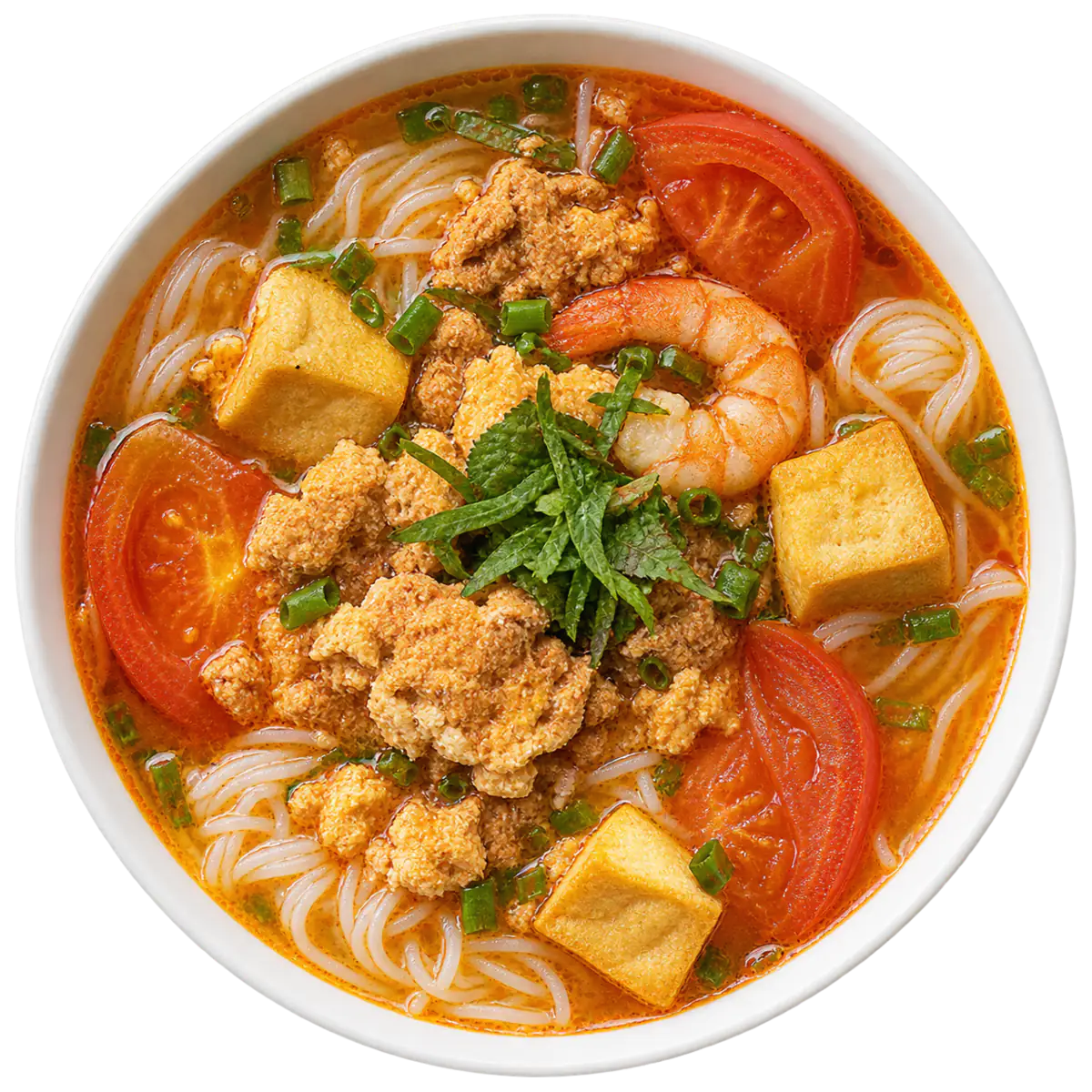
A Vietnamese vermicelli soup in a tomato-sour broth with riêu, a soft cake of minced crab, pork and egg, with fried tofu, herbs and shrimp paste.
Origin and history
Bún riêu is held to be of northern Vietnamese origin, with small freshwater paddy crabs as the base of its broth, and it spread south, picking up regional variations on the way. The sources read give no date or inventor. It is among Vietnam's most common street-food noodle soups today.
Make it at home
- Makes
- 5 servings
- Total time
- 1 h 30 min
- Hands-on
- 50 min
Ingredients
- 700 g1.5 lb pork bones, neck or spare rib bones
- 2.5 litres10 cups water
- 50 g1.75 oz dried shrimp, soaked 30 minutes, then minced fine
- 200 g7 oz crab meat, fresh or good canned, drained; or crab paste
- 150 g5 oz ground pork
- 3 eggs
- 1 tsp shrimp paste (mắm tôm), or 1 tbsp fish sauce
- 1 tsp ground black pepper
- 4 ripe tomatoes, cut in wedges
- 1 tbsp annatto seeds, for the colour oil
- 4 tbsp neutral oil
- 3 shallots, sliced
- 1 tbsp tamarind paste, or 2 tbsp rice vinegar, to taste
- 2 tbsp fish sauce, to taste
- 200 g7 oz fried firm tofu, halved
- 400 g14 oz fresh rice vermicelli (bún), or 250 g / 9 oz dried
- bean sprouts, shredded water spinach, perilla, mint, lime wedges, chili, as the herb plate
- shrimp paste (mắm tôm) and chili, optional, at the table
Method
-
1. Boil the pork bones in water for 5 minutes, drain and rinse, then simmer in 2.5 litres (10 cups) of fresh water for 1 hour, skimming, to make a clear stock.
-
2. Heat the oil with the annatto seeds over low heat for 2 minutes until the oil turns red. Strain, discard the seeds, and keep the oil.
-
3. Mix the minced dried shrimp, crab meat, ground pork, eggs, shrimp paste and pepper by hand until sticky and thoroughly combined.
-
4. Fry the shallots in the red oil for 1 minute, add the tomatoes and cook for 5 minutes until they soften and release juice.
-
5. Strain the stock into a clean pot, add the tomato mixture, tamarind and fish sauce and bring to a gentle simmer, about 90 C (195 F).
-
6. Drop spoonfuls of the crab mixture into the broth. Do not stir for 5 minutes, until the cakes set and float.
-
7. Add the tofu and simmer 5 minutes more. Taste and adjust sourness and salt.
-
8. Divide the vermicelli among bowls, add herbs and sprouts, and ladle over broth with several riêu cakes and tomatoes. Serve with lime and, if you like, mắm tôm.
Notes
- The riêu is the defining element: a soft cake of crab, pork and egg that sets in the simmering broth. Traditionally small freshwater paddy crabs are crushed with their shells and strained, which gives the broth its sweetness; shelled crab meat, dried shrimp and pork are the practical way to get close at home. For a looser, airier riêu, add an extra egg or use a little less pork.
- The colour comes mainly from annatto oil, the sourness from tomato with tamarind or rice vinegar, and mắm tôm (fermented shrimp paste) is stirred in or served at the table, sparingly at first.
- Regional styles differ. Northern bowls are lighter with fewer toppings, central bowls such as Huế's can be spicier and sometimes add snail or fish, and southern bowls are richer and redder, with tofu, sausage, pork blood and a large plate of herbs. Bún riêu ốc, with snails, is a common form.
- Do not boil hard once the riêu is in or the cakes break up and cloud the broth.
- Make ahead: broth and crab mixture can be made a day ahead; cook the riêu cakes fresh.
Adapted from Vietnam Coracle, Bún riêu cua ốc, The Ravenous Couple, Bún riêu cua, and Vietnam Tourism, Bún riêu.
At the festivals
No festival we list has printed it on a menu yet.