
🇻🇳 Vietnam · Huế, central Vietnam
Bún bò HuếVietnamese spicy beef noodle soup
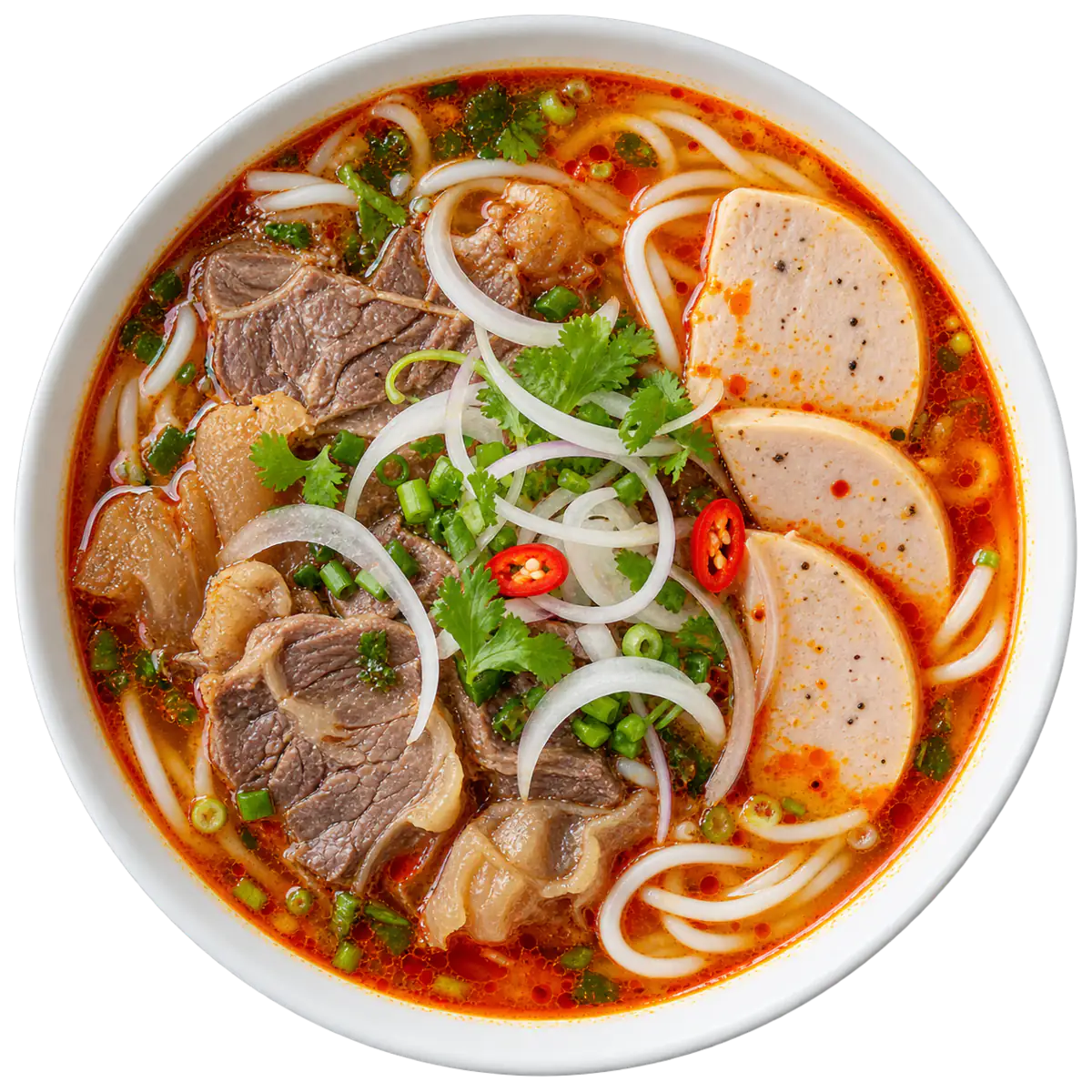
Spicy central Vietnamese soup of thick round rice vermicelli (bún) in a beef-and-pork-bone broth flavoured with lemongrass, chilli and fermented shrimp paste (mắm ruốc), with beef shank and pork knuckle.
Origin and history
A noodle soup of Huế, the former imperial capital of central Vietnam. Its exact origin is uncertain; Huế writers suggest it began as a pork-knuckle noodle soup (bún giò heo), with beef added later, since draught cattle were rarely slaughtered. It spread across Vietnam and abroad as the best-known Huế dish, and in 2025 the folk knowledge of bún bò Huế was added to Vietnam's national list of intangible cultural heritage.
Make it at home
- Makes
- 6 servings
- Total time
- 4 h
- Hands-on
- 1 h
Ingredients
- 1.5 kg3.3 lb beef marrow or knuckle bones (xương ống bò)
- 1 kg2.2 lb pork knuckle / front hock (giò heo), scraped clean, cut across into thick rounds
- 600 g1 1/3 lb beef shank (bắp bò), in one piece, tied with string
- 60 g3 tbsp mắm ruốc Huế (fine fermented shrimp paste)
- 5 l5 1/4 qt water, plus 500 ml (2 cups) for the shrimp paste
- 10 lemongrass stalks (sả), 5 bruised for the broth, 3 tied in a bundle for the end, 2 finely minced for the oil
- 1 onion, peeled, halved
- 1 tbsp rock sugar or sugar
- 3-4 tbsp fish sauce (nước mắm)
- salt, to taste
- 80 ml1/3 cup neutral oil, for the chilli oil
- 1 tbsp annatto seeds (hạt điều màu)
- 4 shallots, for the chilli oil, minced
- 4 garlic cloves, for the chilli oil, minced
- 1-2 tbsp Vietnamese chilli flakes (ớt bột) or minced fresh red chilli, to taste
- 300 g10 oz chả Huế (Huế pork roll, peppery steamed pork sausage), sliced
- 300 g10 oz cooked pork or beef blood cake (huyết), in 3 cm (1 1/4 in) cubes, optional
- 1 kg fresh or 500 g dried2.2 lb fresh or 1.1 lb dried thick round rice vermicelli (bún sợi to / bún bò)
- 1/2 banana blossom (bắp chuối), shredded thinly into water with lime juice; or shredded cabbage
- 200 g7 oz bean sprouts and split water spinach stems (rau muống chẻ)
- 1 bunch each rau răm (Vietnamese coriander), scallions, coriander, scallions and coriander chopped
- lime wedges, sliced chillies and sa tế (chilli-lemongrass paste), to serve
Method
-
1. Stir the shrimp paste into the 500 ml water, bring it to the boil, skim and turn off the heat. Leave it to settle for at least 30 minutes; you will use only the clear liquid on top, not the grey sediment.
-
2. Put the bones, pork knuckle and beef shank in a large pot, cover with cold water, bring to a hard boil for 5 minutes, then drain and rinse everything under running water. This keeps the broth clear.
-
3. Return the meats and bones to the clean pot with the 5 l water, the 5 bruised lemongrass stalks and the onion. Bring to the boil, then lower to a gentle simmer, uncovered, skimming off the foam often.
-
4. Pour in the clear shrimp-paste water and add the rock sugar.
-
5. After about 1 1/2 hours, test the beef shank with a chopstick: when it goes in with little resistance, lift it out into a bowl of cold water for 10 minutes (it firms up and stays pale), then drain and chill it.
-
6. Lift out the pork knuckle when the skin is soft and the meat yields, after 1 1/2-2 hours; keep it covered. Let the bones simmer for about 1 hour more.
-
7. Meanwhile make the chilli oil: warm the oil with the annatto seeds over low heat for 3-4 minutes until it turns deep red, then scoop out the seeds. Add the minced lemongrass, shallots and garlic and fry until golden, then stir in the chilli flakes and take it off the heat.
-
8. Thirty minutes before serving, strain the broth and discard the bones and spent aromatics. Return the broth to the pot with the bundle of fresh lemongrass, the pork knuckle and the blood cake.
-
9. Stir in about half of the chilli oil and season with fish sauce and salt. The broth should be savoury, lightly sweet, strongly scented with lemongrass and shrimp paste, with a slick of red oil on top. Remove the lemongrass bundle before serving.
-
10. Slice the beef shank thinly across the grain.
-
11. Cook dried noodles according to the packet (or briefly refresh fresh ones in boiling water), drain and divide among large bowls.
-
12. Top each bowl with beef shank, chả Huế, a piece of pork knuckle and a few cubes of blood cake. Ladle the very hot broth over, scatter with scallions and coriander, and serve with the vegetables, rau răm, lime, chillies and the remaining chilli oil or sa tế at the table.
Notes
- Mắm ruốc and lemongrass are what make the soup taste of Huế. Use the fine, pinkish Huế-style ruốc, rather than mắm tôm, which can stand in but changes the taste. Settling and decanting it keeps the broth clean.
- Adding a fresh bundle of lemongrass only for the last half hour keeps its scent bright; long-cooked lemongrass alone turns flat and slightly bitter.
- In Huế the beef is boiled shank, sliced; the thin raw beef (tái) seen in many restaurants elsewhere is a later addition. Crab cake (chả cua), beef tendon and blood cake also joined the bowl over time; banana blossom, rau răm and onion are the older garnishes.
- Thick round rice noodles are the standard; in Huế thinner bún is also served, much of it from the old noodle villages such as Vân Cù.
- The broth improves if made a day ahead: chill, lift off some of the fat, and reheat with the fresh lemongrass. Keep meats and broth apart for storage.
- Related: phở, the clear beef noodle soup of the North, which uses flat rice noodles and warm spices rather than lemongrass and shrimp paste.
Adapted from Trịnh Bách, "Bún bò giò heo: Món ngon này có tự bao giờ?", Tuổi Trẻ and Mytour, "Cách nấu bún bò Huế giò heo ngon, công thức chuẩn vị".
At the festivals
Served at 1 festival in Vietnam.
Earlier editions
-
July 23, 2026 – July 26, 2026
🇻🇳 Huế, Vietnam
Huế - Kinh đô Ẩm thực 2026: Ngày Bún bò Huế