
🇨🇱 Chile · national dish; Día de la Cazuela, 30 July
CazuelaChilean meat and vegetable soup
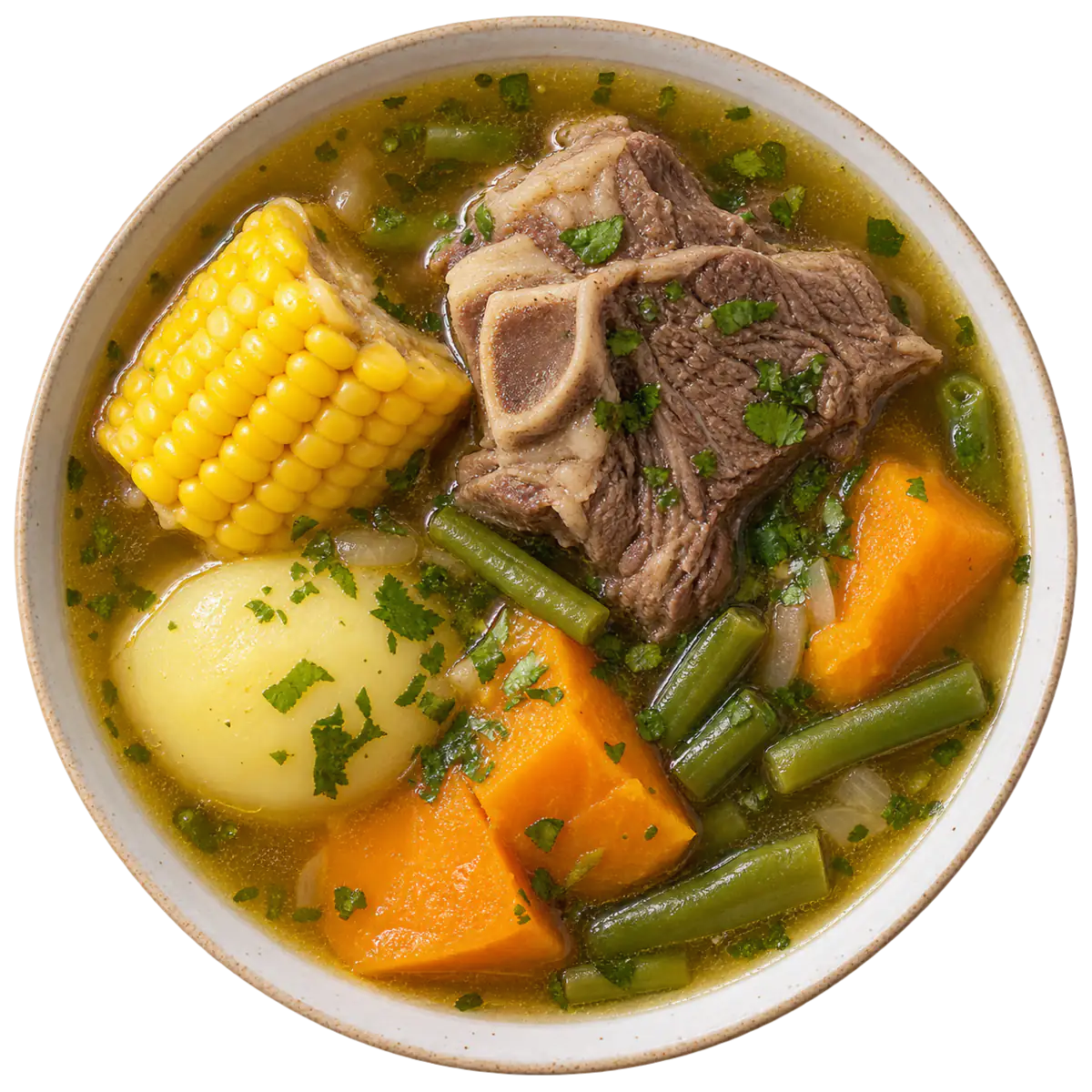
A brothy Chilean dish served as a single piece of chicken or beef in broth with a potato, a piece of squash, corn on the cob and rice, topped with parsley or cilantro.
Origin and history
Chilean sources trace the cazuela to the colonial period, when Spanish broths in the manner of the cocido and the puchero met local produce: potatoes, squash and corn. Some writers also point to the broths of hen, guanaco or huemul made by the Indigenous peoples. It is today regarded as Chile's emblematic home dish, made with beef, chicken, pork or turkey, and is celebrated every 30 July as the Día Nacional de la Cazuela.
Make it at home
- Makes
- 6 servings
- Total time
- 1 h 45 min
- Hands-on
- 30 min
Ingredients
- 1.2 kg2.6 lb beef on the bone: osobuco (cross-cut shank), asado de tira (short ribs) or tapapecho (brisket), cut into 6 serving pieces
- 2 tbsp vegetable oil
- 1 onion, cut in thin strips
- 1 carrot, cut in sticks
- 1/2 red bell pepper (pimentón), cut in strips
- 3 garlic cloves, crushed
- 1 tsp dried oregano
- 1/2 tsp ground cumin
- 1 celery stalk and a few parsley sprigs, tied in a bundle
- 2.5 l10 1/2 cups cold water
- 6 medium potatoes, peeled, left whole
- 600 g1.3 lb zapallo camote (Chilean squash) or butternut or kabocha squash, peeled, cut into 6 pieces
- 2 choclos (fresh corn on the cob), each cut into 3 rounds
- 50 g1/4 cup short-grain rice, rinsed
- 150 g1 cup porotos verdes (green beans), cut in short lengths; optional, in summer
- salt and black pepper, to taste
- 3 tbsp chopped cilantro or parsley
Method
-
1. Season the beef with salt and pepper. Heat the oil in a large pot over medium-high heat and brown the pieces for 3 to 4 minutes on each side, in batches; set them aside.
-
2. Lower the heat to medium, add the onion, carrot, bell pepper and garlic and cook for 5 minutes until the onion is soft, then stir in the oregano and cumin.
-
3. Return the beef to the pot, add the herb bundle and the cold water and bring slowly to the boil, skimming off the foam so the broth stays clear.
-
4. Cover and simmer gently for about 1 hour, until the meat is tender when pierced but still holds to the bone. (In a pressure cooker, about 25 minutes.)
-
5. Add the potatoes and the squash and simmer for 10 minutes.
-
6. Stir in the rice and simmer for 10 minutes more.
-
7. Add the corn and the green beans and cook for 8 to 10 minutes, until a knife slides easily into the potatoes, the rice is soft and the corn is bright yellow.
-
8. Take out the herb bundle and season the broth with salt and pepper.
-
9. Serve in deep plates: one piece of meat, one potato, one piece of squash and one piece of corn in each, covered with broth, rice and beans, with the chopped herbs scattered on top.
Notes
- Cazuela de ave: the other everyday form. Use 6 chicken pieces (thighs and drumsticks), browned with a pinch of cumin, and simmer them for only about 15 minutes before adding the potatoes and squash. A gallina de campo (free-range hen) gives a deeper broth but needs about 1 1/2 hours. Turkey is also used.
- Other forms: cazuela de cerdo, with pork ribs or smoked chops, is typical of the south; coastal cooks make cazuela marina with fish such as reineta or with shellfish; meatless versions rely on squash, beans, potatoes and corn.
- By season: in summer the cazuela carries fresh corn and green beans; in winter more rice is added, or chuchoca (coarsely ground dried corn) is stirred in to thicken the broth.
- Squash: zapallo camote is dense and holds its shape while colouring the broth; butternut or kabocha are the closest substitutes. Watery pumpkins fall apart.
- Cooking the meat first and adding the vegetables by cooking time keeps each piece whole, so that every plate can hold one of everything.
Adapted from Cocina Chilena, Cazuela de pollo chilena and El Dínamo, Día de la cazuela: cómo nace y cómo preparar este clásico plato chileno.
At the festivals
Served at 1 festival in Chile.
Earlier editions
-
July 11, 2026 – July 12, 2026
🇨🇱 Castro, Chile
VII Fiesta Gastronómica de la Cazuela, Caldillos, Caldos y Sopas