
🇺🇸 United States · San Francisco, California
CioppinoSan Francisco seafood stew
A San Francisco seafood soup of Dungeness crab, clams, mussels, shrimp and fish in a tomato and white wine broth with garlic, chili and herbs, served with sourdough.
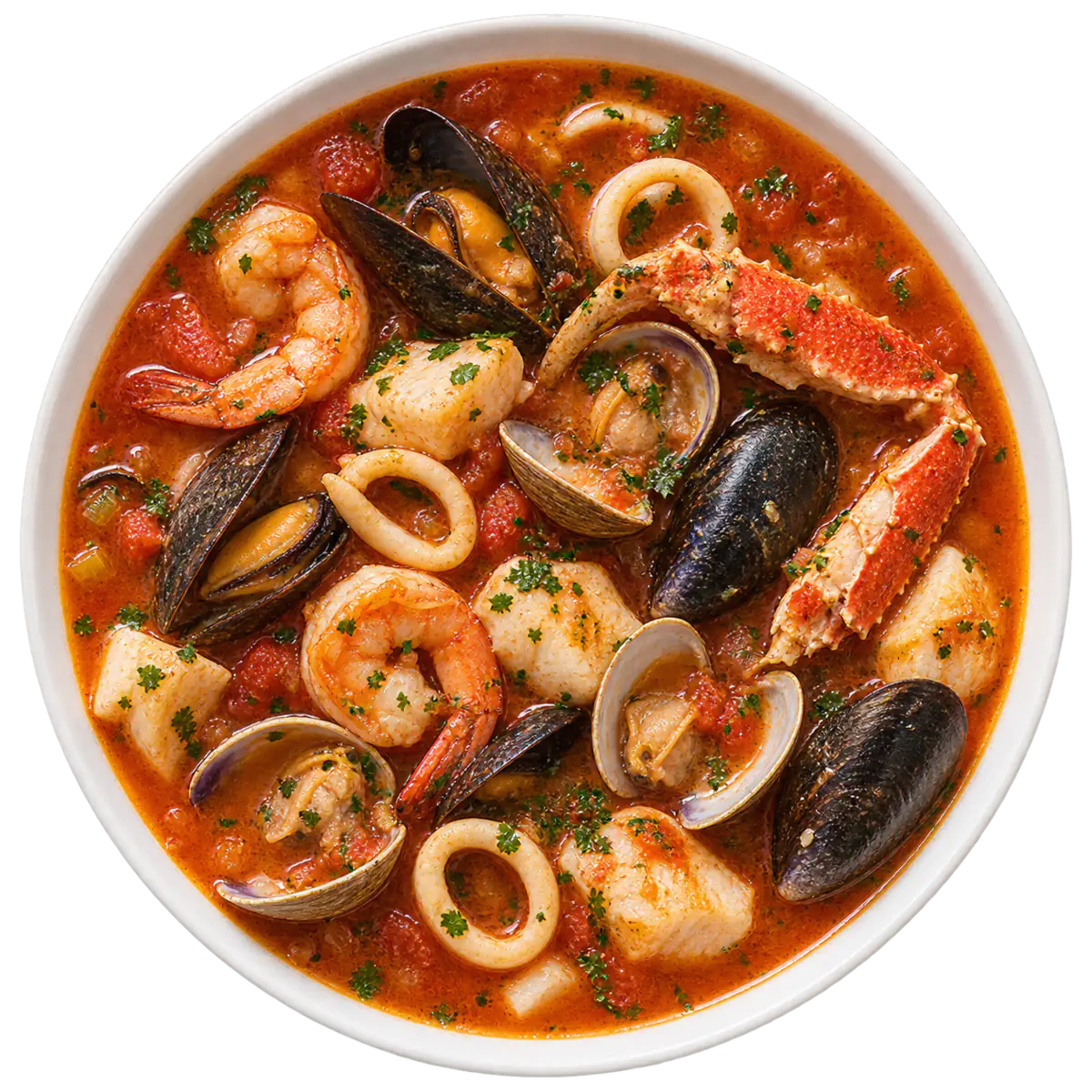
Origin and history
Cioppino is a San Francisco seafood soup, thought to have been created by Italian immigrant fishermen, probably between about 1850 and 1880 according to one researcher quoted by KQED. Its name likely comes from ciuppin, a Genoese fish stew, and chili peppers make it Californian. A 1901 San Francisco Call article described it, and a recipe spelled "chippine" appears in The Refugees' Cook Book (1906), a fundraiser after the earthquake.
Make it at home
- Makes
- 6 servings
- Total time
- 1 h 15 min
- Hands-on
- 45 min
Ingredients
- 60 ml1/4 cup olive oil
- 1 large onion, chopped
- 1 fennel bulb, chopped; optional
- 1 green bell pepper, chopped
- 6 cloves garlic, minced
- 1/2 tsp red chili flakes, or to taste
- 2 tbsp tomato paste
- 800 g28 oz can whole peeled tomatoes, crushed by hand with their juice
- 350 ml1 1/2 cups dry white wine
- 1 l4 cups fish stock or clam juice
- 2 bay leaves
- 1 tsp dried oregano
- 1 cooked Dungeness crab (about 900 g / 2 lb), cleaned and cracked, legs and body in pieces
- 450 g1 lb firm white fish such as rockfish, cod or halibut, in 4 cm (1 1/2 in) chunks
- 450 g1 lb clams, scrubbed
- 450 g1 lb mussels, scrubbed, beards removed
- 450 g1 lb large raw shrimp, peeled, tails on
- 1 handful fresh parsley, chopped
- salt and black pepper, to taste
- 1 loaf sourdough bread, to serve
Method
-
1. Heat the oil in a large heavy pot over medium heat. Cook the onion, fennel and pepper for 8-10 minutes, until soft but not browned.
-
2. Add the garlic and chili flakes and cook for 1 minute, then stir in the tomato paste for 2 minutes.
-
3. Pour in the wine and boil for 3 minutes to cook off the alcohol.
-
4. Add the tomatoes, stock, bay leaves and oregano. Simmer partly covered for 30 minutes, until the broth is rich and slightly reduced. Season with salt and pepper.
-
5. Add the clams, cover and cook for 3 minutes, then add the mussels and fish and cook 3 minutes more.
-
6. Add the shrimp and crab, cover and cook for 3-4 minutes, until the shrimp are pink and the clams and mussels have opened. Discard any that stay shut.
-
7. Remove the bay leaves, scatter with parsley and ladle into wide bowls, with sourdough on the side.
Notes
- Cioppino is flexible: crab, clams, mussels, shrimp and fish are the usual cast, and published recipes vary widely in quantity. The James Beard Foundation recipe uses 3 lb of fish, 1 lb each of crab and shrimp and a quart of clams or mussels for 6-8 servings; a Fisherman's Wharf-style recipe uses 1 1/2 lb each of shrimp, scallops and fish. The amounts here sit between them.
- Tomato and wine are the base, with garlic, onion, green pepper and herbs. The James Beard recipe uses red wine and dried mushrooms and another published version uses red or white; white wine is used here, as in the dish's usual definition, and the chili is a Californian touch.
- James Beard favoured Dungeness crab, and it is the San Francisco signature, but any crab works.
- The broth can be made a day ahead; add the seafood only just before serving, as it cooks in minutes.
- The name probably comes from ciuppin, a Genoese fish stew, but the tomato-and-crab dish is an Italian-American creation. The story of fishermen pooling their catch is probably folklore.
Adapted from KQED, The Fishy Origins of Cioppino, Alta Online, Cioppino: San Francisco's iconic seafood stew, The Refugees' Cook Book (1906), and James Beard Foundation, Cioppino.
At the festivals
No festival we list has printed it on a menu yet.