
🇪🇸 Spain · Andalusia
GazpachoCold Spanish tomato soup
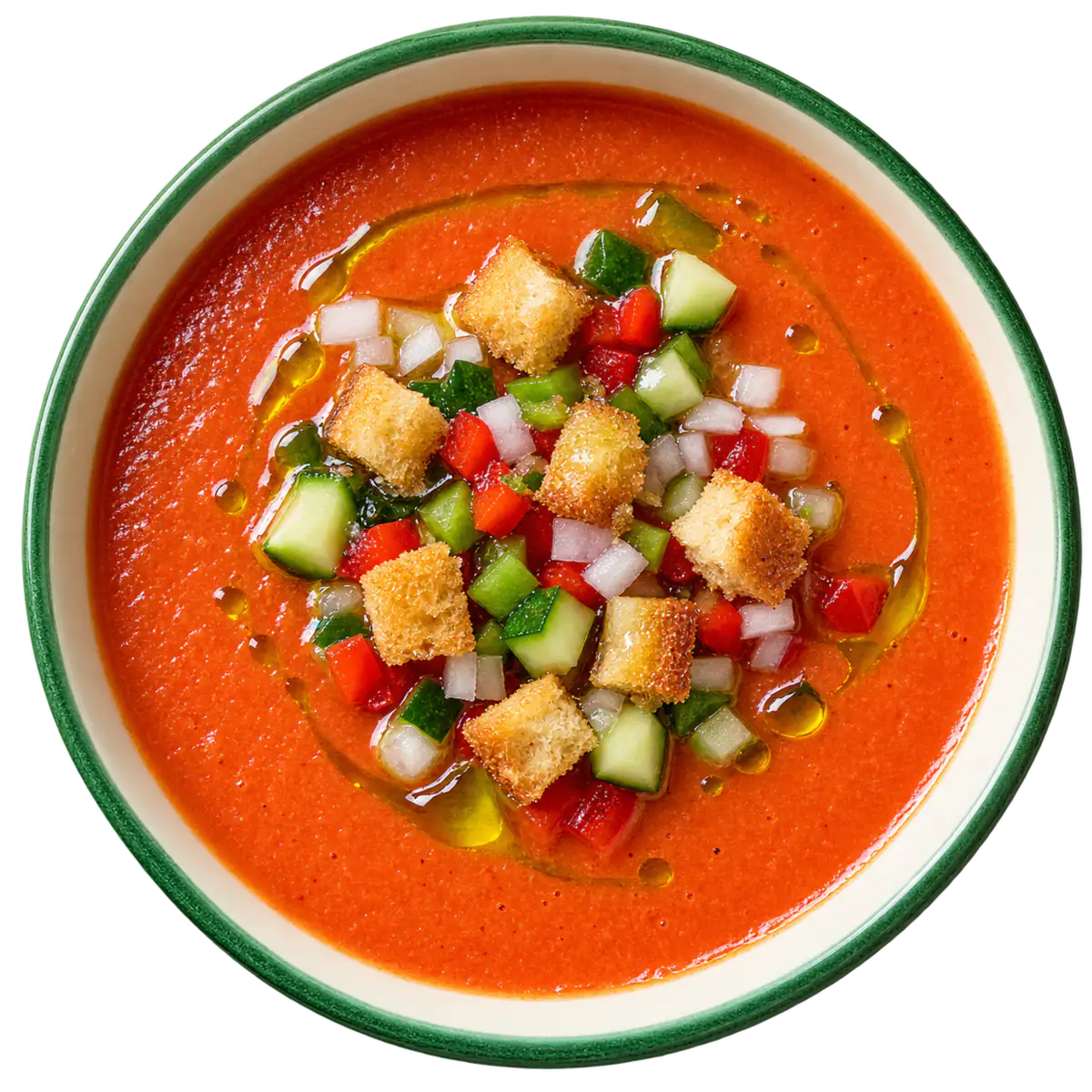
A cold soup of raw blended vegetables, usually tomato, cucumber, pepper and garlic with stale bread, olive oil and wine vinegar.
Origin and history
Gazpacho's base of bread, garlic, oil, vinegar and water is very old, and it is often traced to the Roman soldiers' drink posca. In 1611 the lexicographer Covarrubias dismissed it as food for reapers and rough folk. It remained the staple of Andalusian farm labourers, and in the 19th century it was part of their pay on the great estates. Tomato and pepper from the Americas turned it red. Doctor Thebussem published a mortar recipe in 1888, and the home blender later made the smooth tomato version the norm.
Make it at home
- Makes
- 6 servings
- Total time
- 2 h 20 min
- Hands-on
- 20 min
Ingredients
- 1 kg2.2 lb very ripe tomatoes, ideally pear (plum) tomatoes, cored and quartered
- 1 Italian-type green pepper (pimiento verde italiano), seeded, chopped
- 1/2-1 cucumber (about 150 g / 5 oz), peeled, chopped
- 1-2 garlic cloves, germ removed
- 50-80 g2-3 oz stale country bread (pan de hogaza), crust removed, torn
- 80 ml1/3 cup extra virgin olive oil
- 30 ml2 tbsp sherry vinegar (vinagre de Jerez), plus more to taste
- 250 ml1 cup cold water
- 5 g1 tsp salt, plus more to taste
- garnish: finely diced tomato, cucumber and green pepper; fried bread croutons (picatostes); chopped hard-boiled egg; finely chopped onion, served on the side
Method
-
1. Soak the bread in a little of the cold water for 10 minutes, until soft.
-
2. Put the tomatoes, green pepper, cucumber, garlic, soaked bread with its water, salt and vinegar into a blender.
-
3. Blend for 2-3 minutes, until completely smooth.
-
4. With the motor running, pour in the olive oil in a thin stream. The gazpacho turns paler, orange-pink and creamy as the oil emulsifies.
-
5. Blend in the rest of the cold water. The soup should be pourable, thin enough to drink from a glass.
-
6. Pass it through a fine sieve, pressing with the back of a ladle, to remove the skins and seeds.
-
7. Taste and adjust the salt and vinegar. It should be bright and fresh, with the vinegar noticeable but not sharp.
-
8. Cover and chill for at least 2 hours, until very cold. Do not add ice, which waters it down.
-
9. Stir before serving. Serve in bowls or glasses with the garnishes in small dishes so each person can add their own.
Notes
- Total time: 2 h 20 min (including chilling).
- Gazpacho is only as good as its tomatoes: make it in high summer with the ripest ones you can find. You need not peel them, because the soup is strained.
- The older way is to pound garlic and salt in a mortar (in Andalusia a wooden 'dornillo'), work in soaked bread, then the vegetables, oil, vinegar and water, and strain. It gives a slightly coarser, very aromatic gazpacho. The blender made the smooth, tomato-rich version usual from the 1960s.
- Every Andalusian town and family has its own proportions. Some blend onion into the soup, while others allow it only as a garnish, and red pepper is generally avoided. The simplest country form, aguadillo, is a watery salad of chopped vegetables in oil, vinegar and salted water.
- Make-ahead: gazpacho keeps 1-2 days in the fridge, covered so it does not oxidise or take on other smells.
- Related cold soups with their own pages: salmorejo (Córdoba; much thicker, tomato and bread only, topped with ham and egg), ajoblanco (almonds, garlic and bread, no tomato) and the Portuguese gaspacho alentejano. They are related to gazpacho, not variants of it.
Adapted from Directo al Paladar, "Gazpacho andaluz tradicional", Consumer (Fundación Eroski), "Cómo elaborar el tradicional gazpacho andaluz", and Doctor Thebussem (Mariano Pardo de Figueroa), La Mesa Moderna (1888), as quoted by Mercasa.
At the festivals
Served at 4 festivals in Spain, Germany, Czechia, and United States.
Earlier editions
-
July 31, 2026
🇪🇸 Alfarnatejo, Spain
Fiesta del Gazpacho de los Tres Golpes
-
August 02, 2025
🇪🇸 Alfarnatejo, Spain
Fiesta del Gazpacho de los Tres Golpes
On the menu as Gazpacho de los Tres Golpes
- September 16, 2023
-
October 19, 2019
🇨🇿 Prague, Czechia
Podzimní Polívkování
-
March 10, 2018
🇺🇸 Concord, New Hampshire, United States
9th Annual SouperFest
- September 23, 2017