
🇧🇬 Bulgaria and 🇲🇰 North Macedonia
TaratorCold Bulgarian cucumber soup
Cold summer soup of yogurt thinned with water, diced cucumber, garlic, dill, walnuts and oil, served chilled.
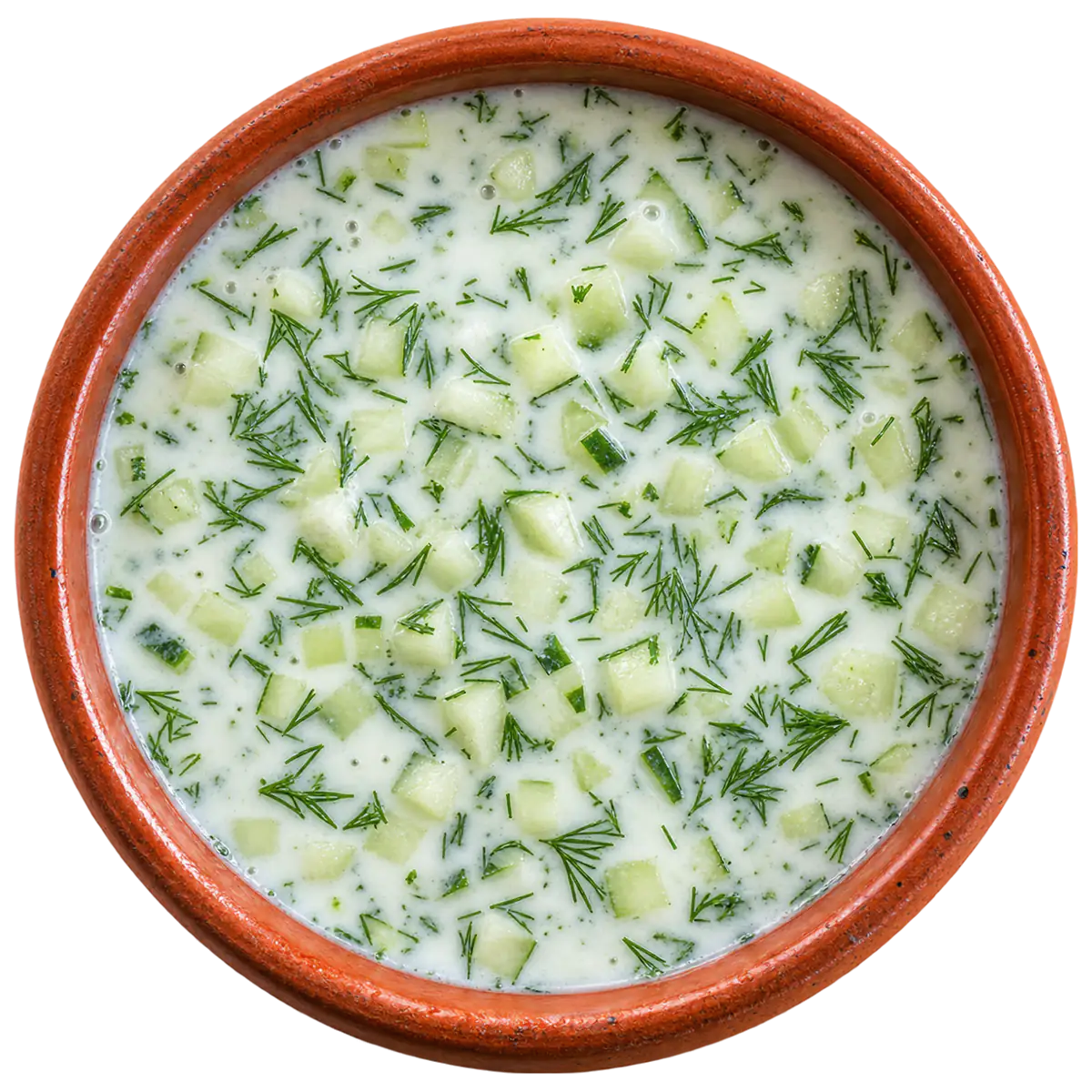
Origin and history
The word reached Bulgarian from Turkish, ultimately of Persian origin. Nayden Gerov's 19th-century dictionary defines tarator as a cold soup of cucumbers, garlic, walnuts and vinegar; before the mid-20th century that walnut-and-vinegar form was the usual one and the yogurt version less common. The 1956 'Kniga za domakinyata' (Housewife's Book) printed the recipe close to today's: diced cucumber, whisked yogurt, garlic, dill, oil, crushed walnuts and ice. Since then the yogurt tarator has become Bulgaria's emblematic summer soup.
Make it at home
- Makes
- 4 servings
- Total time
- 1 h
- Hands-on
- 15 min
Ingredients
- 2 (about 500 g)2 (about 1.1 lb) cucumbers, peeled if the skin is thick or bitter
- 500 g2 cups plain whole-milk yogurt (kiselo mlyako), ideally Bulgarian-style sheep's or cow's yogurt, not strained or Greek-style
- 400–500 ml1 2/3–2 cups cold water, or part water, part ice cubes
- 2–3 cloves garlic, crushed with a little salt
- 1/2 bunch (about 15 g)1/2 bunch (about 1/2 cup chopped) fresh dill, finely chopped
- 50 g1/2 cup walnuts, finely chopped or crushed in a mortar
- 30 ml2 tbsp sunflower oil (or olive oil)
- 1 tsp salt, plus more to taste
- black pepper or a splash of vinegar, optional
Method
-
1. Cut the cucumbers into small cubes, about 5 mm (1/4 in); traditional cooks dice them rather than grate them, so they stay crisp.
-
2. Put the cucumber in a deep bowl with the crushed garlic, most of the dill, the salt and the oil, and stir so the cucumber is coated before any yogurt goes in.
-
3. Whisk the yogurt in a separate bowl until it is completely smooth, with no lumps.
-
4. Pour the yogurt over the cucumbers and stir.
-
5. Add the cold water gradually, stirring, until the soup is the thickness of single cream; with full-fat yogurt about equal parts yogurt and water is right, with leaner yogurt use less water.
-
6. Taste and adjust the salt; add a little pepper or a few drops of vinegar if you like it sharper.
-
7. Chill for at least 30 minutes, or add a few ice cubes if you want to serve it at once.
-
8. Ladle into bowls or glasses and scatter the walnuts and the remaining dill on top; some cooks stir the walnuts in instead.
Notes
- Total time: 1 h, including chilling.
- Tarator is eaten very cold in high summer, as a starter or alongside the main course (fried peppers, meatballs, moussaka), and in Bulgaria often with a glass of rakia.
- In Bulgarian villages the base was whatever soured milk the house had: cow's, sheep's or goat's. Sheep's-milk yogurt gives the richest, tangiest soup.
- Seasonal substitutes for the cucumber are traditional: finely shredded lettuce in spring, chopped pickled cucumbers in winter.
- The walnuts are what most Bulgarian cooks consider the finishing touch, but some households leave them out; they are not optional in the older vinegar-based form described below.
- The older Bulgarian tarator, common until the mid-20th century, had no yogurt: crushed walnuts and garlic mixed with vinegar diluted in water, with cucumber. North Macedonia's taratur is the same yogurt soup as today's Bulgarian one.
- Do not confuse it with the Turkish and Levantine tarator, which is a sauce of walnuts or tahini, bread, garlic and lemon, and with Turkish cacık, a thicker yogurt-and-cucumber dish usually seasoned with mint.
- Best made the same day; the cucumber softens and the garlic grows stronger overnight.
Adapted from Kniga za domakinyata (The Housewife's Book), Sofia, 1956, Visit Bulgaria: Tarator (Bulgarian cold cucumber soup), and Petel.bg: The 1956 Bulgarian tarator recipe.
At the festivals
Served at 1 festival in Poland.
Earlier editions
-
May 19, 2007
🇵🇱 Kraków, Poland
6th Soup Festival
On the menu as Bulgarian tarator style soup (zupa)
By Flower Power