
🇯🇵 Japan · Yamagata and the Tohoku region, riverbank autumn gatherings
ImoniTohoku taro soup
An autumn pot soup of satoimo (taro) simmered with meat, konnyaku and scallion, seasoned with soy sauce in the inland style or with miso in the Shonai style, cooked outdoors by the river.
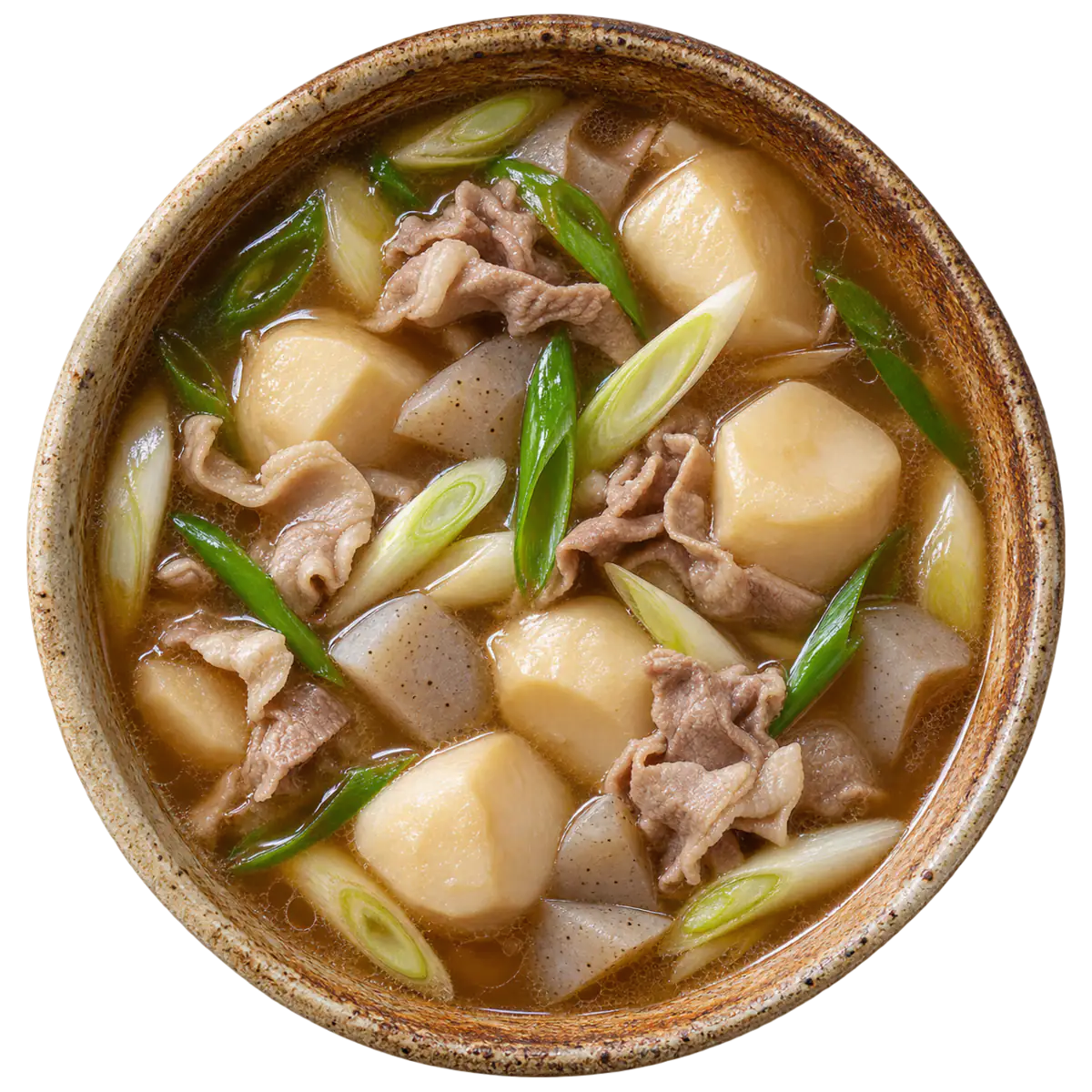
Origin and history
Imoni is said to go back to the mid-1600s, when Mogami River boatmen waiting for cargo cooked taro from the nearby village of Oshio with dried cod; beef came into use in the early Showa era. It is an autumn soup of Yamagata: in September and October groups cook and eat it together on the riverbed in Yamagata City, and a Japan's Best Imoni Gathering is held in September.
Make it at home
- Makes
- 4 servings
- Total time
- 50 min
- Hands-on
- 25 min
Ingredients
- 650 g1 lb 7 oz satoimo (taro), peeled, large ones halved; rubbed with salt and rinsed
- 120 g4 oz flat konnyaku, torn by hand into bite-sized pieces, parboiled
- 280 g10 oz thinly sliced beef, fatty cuts such as belly; cut in 5 cm / 2 in pieces
- 120 g4 oz green onion (negi), sliced on the diagonal
- 800 ml3 1/3 cups water
- 4 tbsp soy sauce, split in two portions
- 1 1/2 tbsp sugar
- 3 tbsp sake
- shichimi chili pepper, optional, to serve
Method
-
1. Peel the taro, halve the big ones, rub them with salt to remove the slime and rinse well.
-
2. Tear the konnyaku by hand and parboil it for a few minutes to remove the smell. Cut the beef and slice the green onion.
-
3. Put the taro and the water in a pot and bring to a boil. Add the konnyaku and two thirds of the soy sauce, sugar and sake.
-
4. Simmer until the taro is soft when pierced with a skewer, skimming the foam that taro throws up as it boils.
-
5. Add the beef and the rest of the seasonings, separating the slices as they go in. Keep skimming.
-
6. Add the green onion, adjust the taste, and simmer a few minutes until the taro is very soft and the broth has taken on its flavor. Serve very hot, with shichimi if you like.
Notes
- This is the inland Yamagata style: beef and a soy sauce broth. The Shonai coast uses pork in a miso broth with thick fried tofu, konnyaku and green onion; the Mogami area often adds mountain vegetables and mushrooms; Okitama favors large cubes of firm tofu and a little miso.
- Some cooks season the beef first with soy sauce and sugar, take it out, simmer the taro in that liquid and put the beef back at the end.
- Udon is often added to the leftover broth at the end of the meal, and some people stir in curry roux.
- Pre-peeled taro saves time. Imoni is traditionally eaten at imoni-kai, outdoor gatherings where people bring pots and ingredients to the riverbank and cook together; in Yamagata City they run in September and October.
Adapted from Yamagata City, food education page: Imoni (taro, konnyaku, beef, green onion) and Ministry of Agriculture, Forestry and Fisheries, Our regional cuisine: Imoni (Yamagata).
At the festivals
Served at 1 festival in Japan.
Earlier editions
- September 20, 2026
-
September 17, 2023
🇯🇵 Yamagata, Japan
35th Nihon-ichi no Imoni-kai Festival
On the menu as 芋煮
By Giant pot "Nabe-taro" and Pot about 3 metres in diameter