
🇯🇵 Japan · Kamakura, Kanagawa (Kenchoji temple tradition), eaten across Japan
KenchinjiruJapanese root vegetable and tofu soup
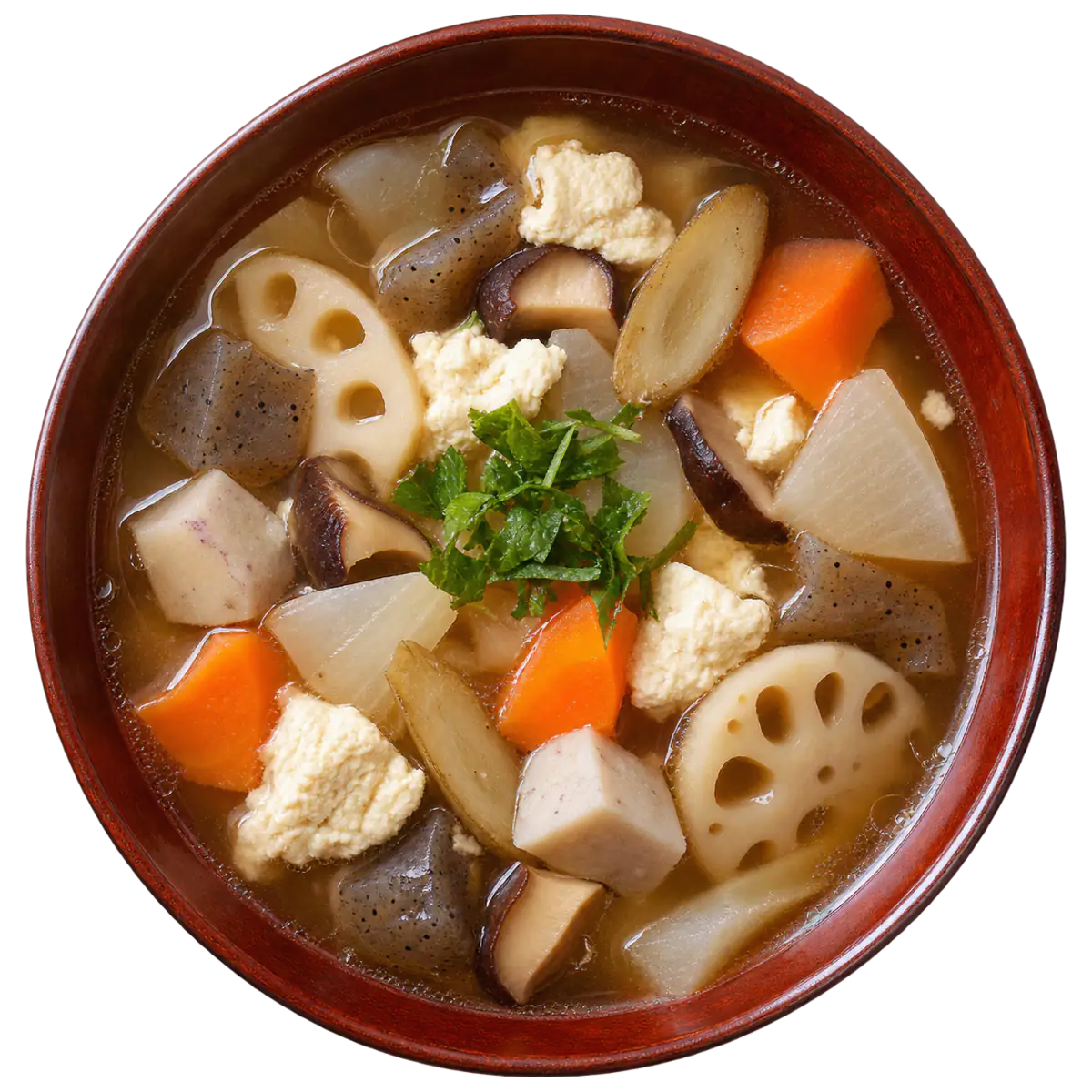
A clear soup of root vegetables, konnyaku and crumbled tofu, first sauteed in sesame oil and then simmered in kombu and shiitake dashi, seasoned with salt and soy sauce.
Origin and history
Kenchinjiru is a clear vegetable soup in which daikon and other roots are fried in oil before simmering. Japan's Ministry of Agriculture says the name may come from a Chinese vegetarian dish called juanchan, or from the kencho-jiru of Kenchoji temple in Kamakura, where it has been served for over 700 years. According to a well-known anecdote, the temple's first abbot washed tofu that trainee monks had dropped and put it in the soup, which is why tofu is included. It is now a common home dish across Japan.
Make it at home
- Makes
- 4 servings
- Total time
- 2 h 30 min
- Hands-on
- 40 min
Ingredients
- 7 cm (3 in)3 in dried kombu, for the dashi
- 2 to 3 dried shiitake, soaked with the kombu, then stemmed, chopped and used in the soup
- 700 ml3 cups water, soaked with the kombu and shiitake overnight, giving about 600 ml of dashi
- 60 g2 oz daikon, cut in half-moons, skin left on
- 45 g1 1/2 oz carrot, half-moons, skin left on
- 45 g1 1/2 oz lotus root, half-moons, skin left on
- 45 g1 1/2 oz burdock root (gobo), scrubbed, shaved or cut in thin half-moons
- 45 g1 1/2 oz satoimo (taro), peeled, bite-sized, rubbed with salt and rinsed
- about 1/5 block (50 g)about 1/5 block (2 oz) black konnyaku, boiled, torn by hand
- 1/4 block (about 80 g)1/4 block (3 oz) firm (momen) tofu, squeezed well
- 1 small handful daikon leaves or komatsuna, blanched, squeezed and finely chopped
- 2 tbsp sesame oil, plus a few drops to finish
- 1 splash sake
- 2 tbsp soy sauce, add gradually
- salt and mirin, a little of each, to taste
Method
-
1. The night before, soak the kombu and the shiitake in the water in the refrigerator. Next day heat it gently, skim, and simmer on low heat for 30 minutes. Cool quickly in ice water; remove the kombu. Keep the shiitake, cut off the stems and chop the caps.
-
2. Boil the konnyaku for a few minutes, prick it with a fork, tear it into bite-sized pieces and dry-fry it in the pot to drive off the water.
-
3. Blanch the greens, cool them in cold water, squeeze them dry and chop finely.
-
4. Heat the sesame oil in a large pot and stir-fry the konnyaku, burdock, lotus root, carrot, daikon and taro, in that order, adding a little sake. Cook until the vegetables are coated in oil and just beginning to soften.
-
5. Pour in the dashi, add the shiitake and skim the scum. Keep the liquid just below a boil.
-
6. When the vegetables are cooked, simmer on low heat for about 1 hour so the flavors soak in (the ministry's recipe allows 1 to 2 hours). Season with salt first, then the soy sauce and mirin, slightly stronger than you want, because the tofu will mellow it.
-
7. Crumble the tofu into the pot by hand over low heat and let it warm through for a few minutes. Taste again and add a few drops of sesame oil for aroma.
-
8. Ladle into bowls and top with the chopped greens.
Notes
- Cut the vegetables into similar sizes and leave the skins on daikon, carrot and lotus root. The soup is made with whatever root vegetables are in season. Quantities follow the Ministry of Agriculture's recipe for 2 to 3 servings, scaled up by about half.
- The temple form is strictly vegetarian, with a dashi of kombu and shiitake, and was traditionally made with leftover vegetables from other temple dishes. Adding chicken or pork and bonito dashi would no longer be the temple form.
- The tofu goes in last and is crumbled by hand, never cubed. Keep the heat low so the soup stays clear.
- It differs from miso soup (no miso) and from tonjiru (pork and miso). It is eaten all year but especially in winter, and in parts of the Kanto region at Setsubun or Ebisu-ko festivals; Kenchoji serves it at its February Setsubun ceremony.
- Make-ahead: the dashi can be made two days ahead; the soup is also good reheated gently the next day.
Adapted from Ministry of Agriculture, Forestry and Fisheries, Our regional cuisine: Kenchinjiru (Kanagawa) and Nippon.com, Guide to Japan: kenchinjiru.
At the festivals
No festival we list has printed it on a menu yet.