
🇯🇵 Japan
TonjiruJapanese pork miso soup
A hearty miso soup of thinly sliced pork and many root vegetables (daikon, carrot, burdock, taro) with konnyaku and tofu, made on dashi and often served as the main soup of a meal.
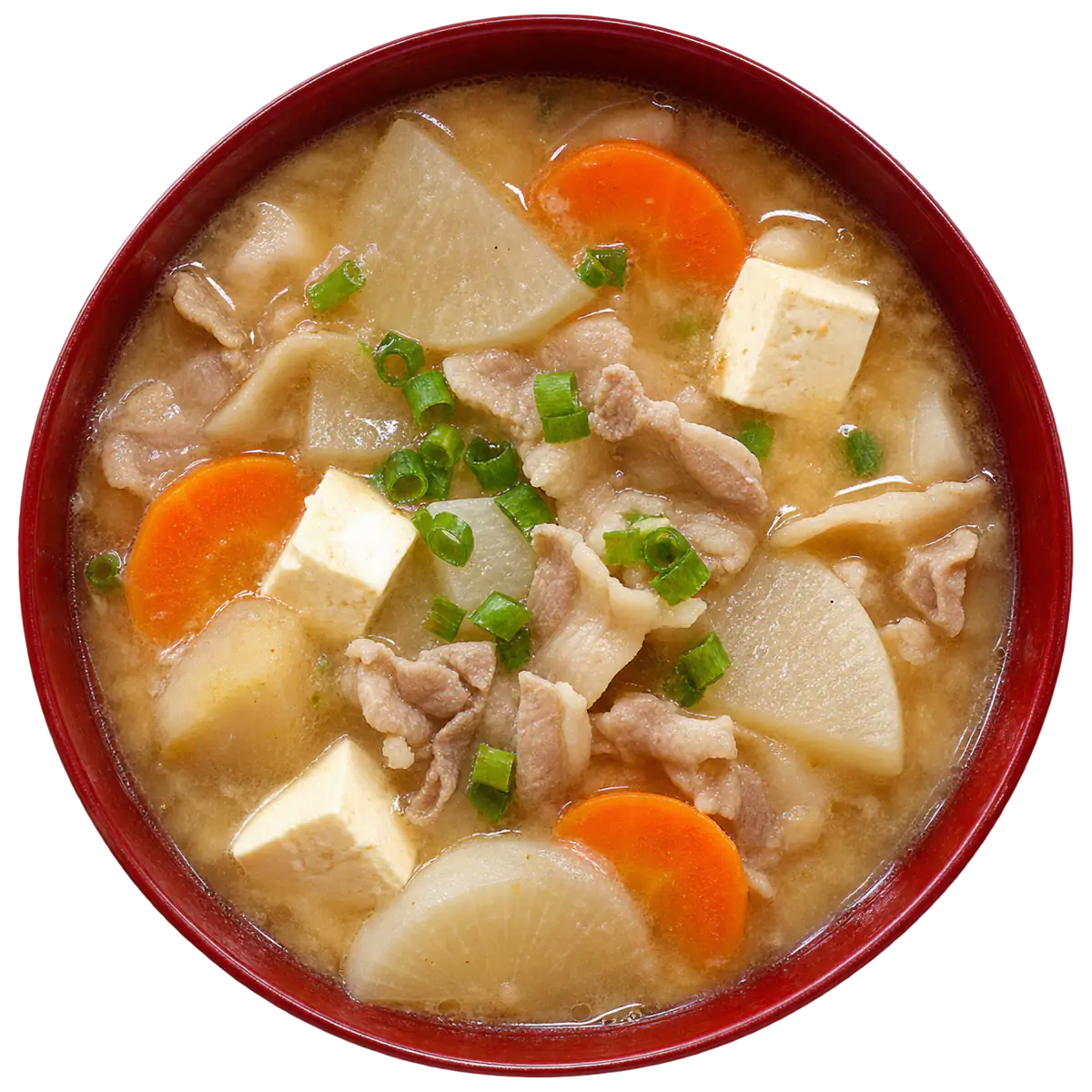
Origin and history
Tonjiru (written 豚汁, read tonjiru or butajiru) is a miso soup of pork and root vegetables, treated in Japan as a winter dish because the pork fat makes it heavier than an ordinary miso soup. Satsuma-jiru, the chicken soup of Kagoshima, is made in almost the same way; one Japanese source tells its origin as a story of Edo-period Satsuma samurai and fighting cocks. The sources do not give a date or place for tonjiru itself.
Make it at home
- Makes
- 6 servings
- Total time
- 50 min
- Hands-on
- 35 min
Ingredients
- 300 g10 oz thinly sliced pork belly, cut into bite-size pieces; part loin is fine
- 1 tbsp toasted sesame oil
- 100 g3 1/2 oz gobo (burdock root), scrubbed, shaved or sliced thin, soaked in water
- 230 g8 oz satoimo (taro), peeled, sliced, rinsed to remove the slime
- 250 g9 oz daikon, peeled, cut into thin quarter-rounds
- 120 g4 oz carrot, thin half-moons
- 1/2 block (130 g)1/2 block (4 1/2 oz) konnyaku, torn or sliced and boiled for 2 minutes
- 1 yellow onion, sliced
- 1 aburaage (fried tofu pouch), optional, blotted and cut into strips
- 1.2 L5 cups dashi, kombu and bonito
- 5 tbsp miso, about 80 g (3 oz), to taste
- 200 g7 oz medium-firm tofu, torn into pieces
- 1 tsp grated fresh ginger
- 2 scallions, sliced, for serving
- shichimi togarashi, to serve, optional
Method
-
1. Prepare the vegetables: drain the gobo and taro, slice the daikon, carrot and onion, and boil the konnyaku for 2 minutes and drain.
-
2. Heat the sesame oil in a heavy pot over medium heat and stir-fry the pork until it loses its pink colour.
-
3. Add the onion, then the daikon, carrot, gobo, taro, konnyaku and aburaage, and stir for 2 to 3 minutes.
-
4. Pour in the dashi, bring to a boil and skim off the scum and excess fat.
-
5. Lower the heat, cover and simmer 10 to 15 minutes, until a skewer slides easily into the daikon and taro.
-
6. Turn off the heat, dissolve the miso in a ladle of broth and stir it back in, add the ginger and torn tofu.
-
7. Reheat gently until steaming; do not boil, which dulls the miso. Serve in large bowls with scallion and shichimi togarashi.
Notes
- Pork is the defining ingredient and the vegetables are packed densely so the bowl eats like a meal. It is considered a winter soup, and the film of pork fat keeps it hot longer than an ordinary miso soup. Some cooks add potato or negi.
- Satoimo and gobo are hard to find outside Japanese or Asian shops; use potato for taro and extra carrot or parsnip for gobo, which changes the earthiness. Water with a pinch of dashi powder can stand in for homemade dashi.
- Satsuma-jiru is the Kagoshima chicken form of nearly the same method. Tonjiru is read tonjiru or butajiru.
- Make ahead: it keeps 2 days and the flavour deepens; add the tofu and miso when reheating.
Adapted from Just One Cookbook, Tonjiru and RecipeTin Japan, Tonjiru.
At the festivals
No festival we list has printed it on a menu yet.