
🇹🇼 Taiwan · Kaohsiung/Taipei, post-1949
Taiwanese beef noodle soup
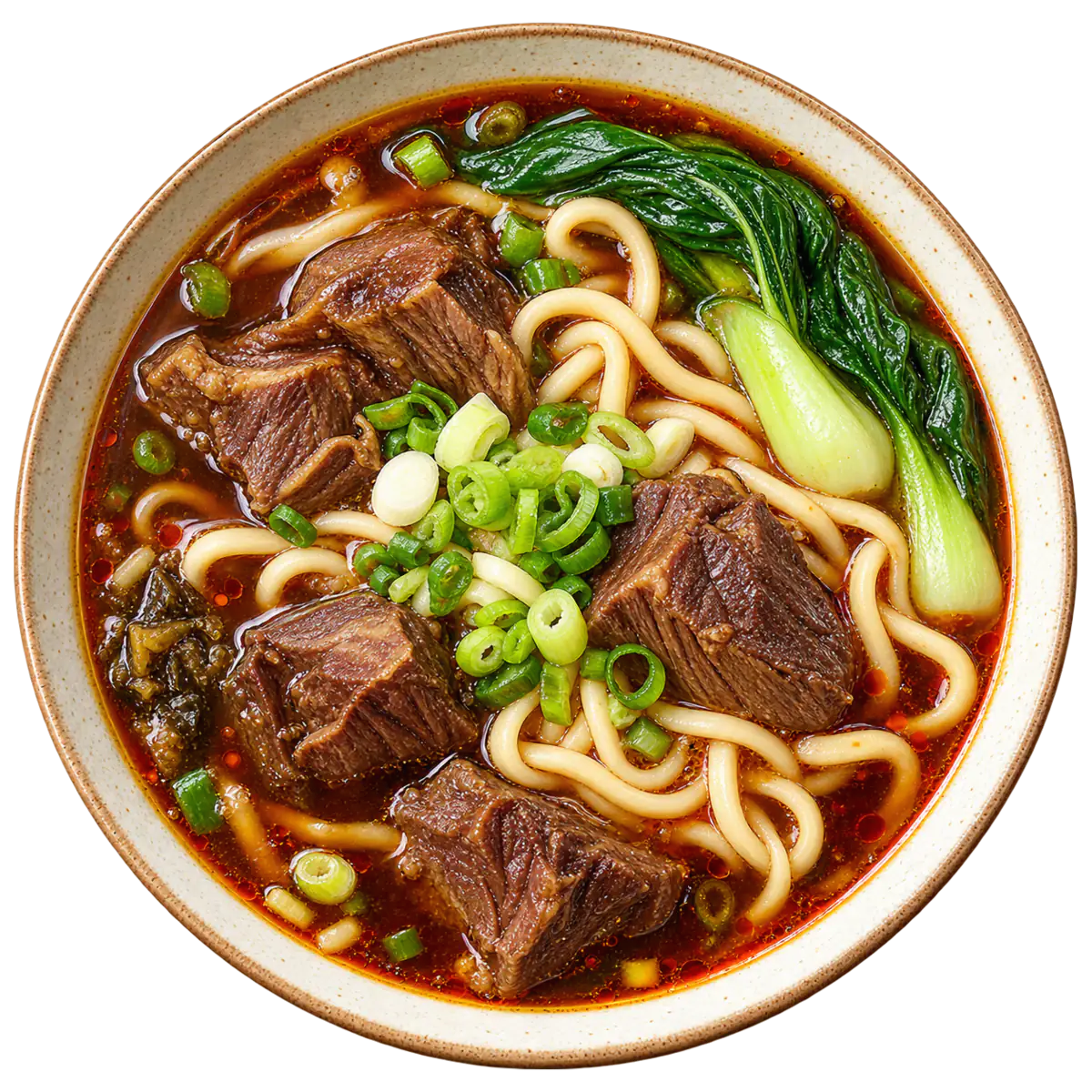
Taiwanese noodle soup of wheat noodles, braised beef (shank, tendon or brisket) and a long-simmered beef broth, with pickled mustard greens and scallions.
Origin and history
Beef was little eaten in agrarian Taiwan, where cattle worked the fields. Beef noodle soup took shape after 1949, when Nationalist soldiers and their families arrived from the mainland; the historian Lu Yao-tung traced the red-braised style to Sichuanese veterans at the Gangshan air base in Kaohsiung, who made their own chili bean paste. US aid flour spread noodle eating, and the dish moved from military villages to Taipei and became a national favourite.
Make it at home
- Makes
- 6 servings
- Total time
- 3 h 15 min
- Hands-on
- 45 min
Ingredients
- 1.2 kg2.6 lb beef shank (牛腱, niújiàn), or shank and tendon mixed, cut in 4 to 5 cm (1 1/2 to 2 in) chunks
- 2 tbsp vegetable or peanut oil
- 6 slices fresh ginger, about 3 mm (1/8 in) thick
- 6 cloves garlic, smashed
- 3 scallions, cut in 5 cm (2 in) lengths
- 1 ripe tomato, cut in wedges
- 1 1/2 tbsp doubanjiang (spicy fermented bean paste, ideally Taiwanese Gangshan style)
- 1 tbsp (15 g)1 tbsp rock sugar or white sugar
- 120 ml1/2 cup Taiwanese rice wine (米酒) or Shaoxing wine
- 100 mlscant 1/2 cup light soy sauce
- 2 tbsp dark soy sauce, for colour
- 2 star anise
- 1 tsp Sichuan peppercorns
- 2.5 l10 1/2 cups water
- 600 g1.3 lb fresh wheat noodles, medium or wide, or 400 g / 14 oz dried
- 6 small heads baby bok choy or other leafy greens, halved
- 150 g5 oz suan cai (pickled mustard greens, 酸菜), rinsed, chopped, stir-fried with 1 tsp oil and a pinch of sugar
- 2 scallions, thinly sliced, to serve
- chili oil and salt, to taste
Method
-
1. Put the beef in a pot of cold water, bring it to a boil and boil for 3 minutes. Drain, rinse the meat under running water and wash the pot; this keeps the broth clean.
-
2. Heat the oil in the clean pot over medium heat and fry the ginger, garlic and scallions for 1 minute, until fragrant.
-
3. Add the tomato and cook for 2 minutes, until it softens. Stir in the doubanjiang and fry for 1 minute, until the oil turns red.
-
4. Add the beef and sugar and stir for 3 minutes to coat the meat.
-
5. Pour in the rice wine and let it bubble for a minute, scraping the bottom. Add both soy sauces, the star anise, the Sichuan peppercorns and the water.
-
6. Bring to a boil, skim off any foam, then cover and simmer very gently for 2 1/2 hours, until a chopstick slides easily into the shank (tendon, if used, should be soft and translucent).
-
7. Taste the broth: it should be savoury, slightly sweet and gently spicy. Add salt or a splash of water to balance it, and fish out the star anise.
-
8. Cook the noodles in a large pot of unsalted boiling water until just tender, adding the bok choy for the last minute. Drain.
-
9. Divide the noodles and greens among large bowls, pile the beef on top and ladle over the hot broth.
-
10. Finish with sliced scallions and serve with the suan cai and chili oil on the table.
Notes
- Two styles dominate in Taiwan: hongshao (紅燒, red-braised), built on soy sauce and doubanjiang, and qingdun (清燉, clear-stewed), a clear broth of long-simmered beef and bones seasoned with little more than ginger, rice wine and salt. The site has a page and full recipe for each. This is the everyday home pot, a lighter red-braised soup.
- Cuts: shank is the classic; 'half tendon, half meat' (半筋半肉) is the most common order in shops. Tendon needs about 30 minutes longer than shank. Tripe and other offal are also served.
- Suan cai is the essential condiment: its sour crunch cuts the richness of the broth. Look for it in vacuum packs at Asian grocers; rinse it to remove excess salt.
- Noodles: wide or knife-cut noodles hold the broth and stay chewy; thinner noodles give a lighter bowl. Always cook them separately so the broth stays clear.
- Make-ahead: the beef and broth keep 3 days in the fridge and taste better the next day. Lift off the fat, reheat, and cook the noodles fresh.
Adapted from Cathy Erway, The Food of Taiwan: Recipes from the Beautiful Island (Taiwanese Beef Noodle Soup) and Michelin Guide Taiwan, 經典美味:牛肉麵.
Variants
-
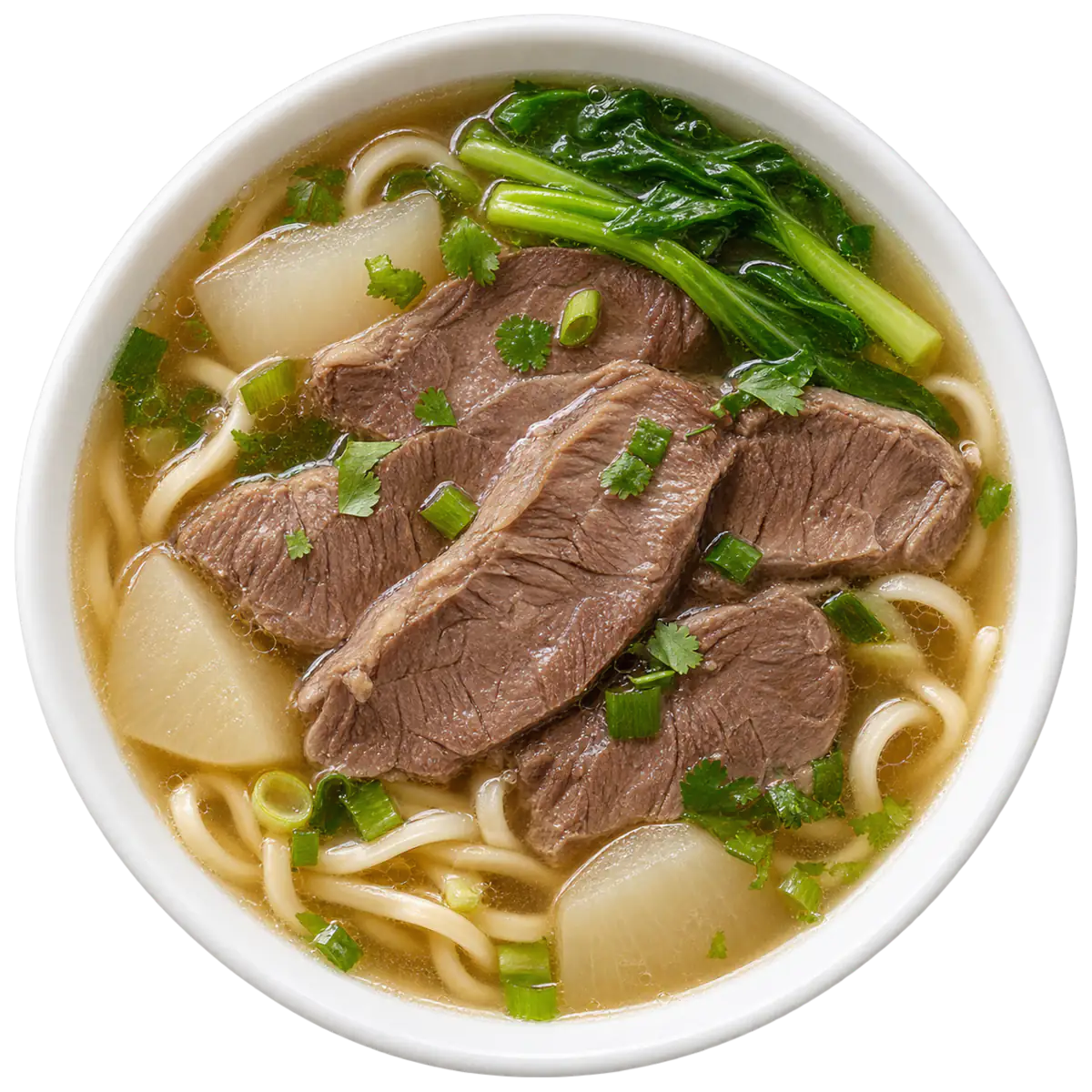 Clear-stewed beef noodle soup
The clear style of Taiwanese beef noodle soup: beef stewed gently in a light, clear broth made without soy sauce.
At 1 festival
-
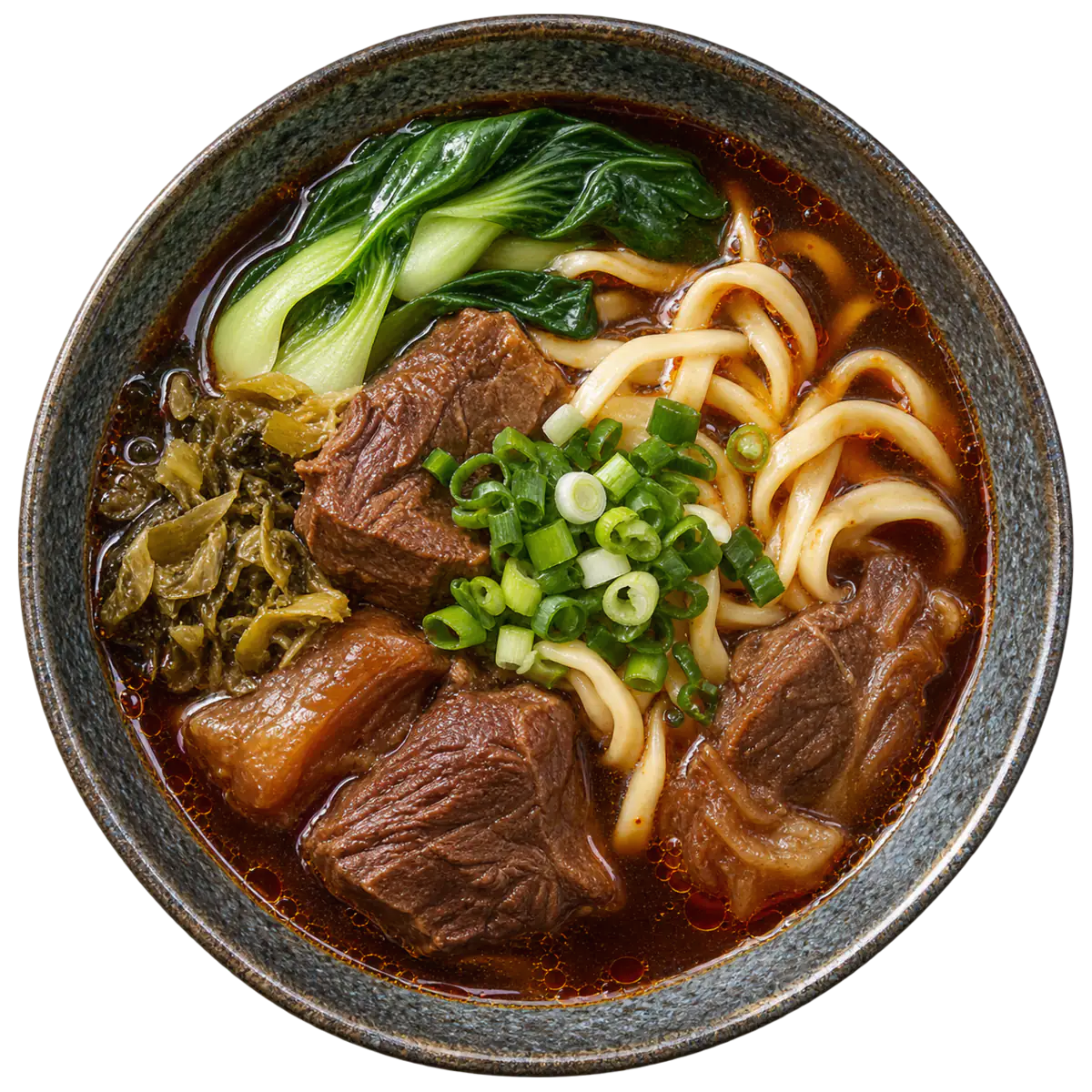 Red-braised beef noodle soup
The soy-braised style of Taiwanese beef noodle soup, one of its two classic schools (red-braised and clear-stewed): beef braised for hours with soy sauce, doubanjiang and spices, giving a dark reddish-brown broth.
At 1 festival
At the festivals
Served at 1 festival in Taiwan.
Earlier editions
-
October 10, 2025 – October 12, 2025
🇹🇼 Taipei, Taiwan
21st Taipei International Beef Noodle Festival
On the menu as 好食圓滿 beef noodle and hahababy beef noodle
By 好食圓滿 and hahababy (二伯, wife of influencer 蔡阿嘎)
-
September 17, 2022 – September 18, 2022
🇹🇼 Taipei, Taiwan
2022 Taipei Beef Noodle International Prize (臺北市牛肉麵國際大賞, 'Wa-cow Carnival')
On the menu as 紅燒牛肉麵
By 桃園「金大方麵食館」, 台北老爺 (Taipei Howard), chef 林繼正, 台北晶華 (Regent Taipei), chef 林承翰 of 晶華軒, 六福萬怡酒店大廳酒吧The Lounge, 台北凱達大飯店 「98酒吧」, Gold: 金大方麵食館, 老爺大酒店, 兩支北方麵食館, Suage (Hokkaido), Winners: 金大方麵食館, 老爺大酒店, 兩支北方麵食館 (gold), Winner: 基隆翹腳牛肉麵 (gold), Competing shops, fresh-food group, and Ready-to-cook pack group
-
September 24, 2019
🇹🇼 Taipei, Taiwan
2019 Taipei Beef Noodle Xiangwei International Grand Evaluation (臺北市牛肉麵饗味國際大評比)
On the menu as 紅燒牛肉麵 (2012紅燒冠軍牛肉麵) and 極品牛B腱麵
By 皇家傳承 and 天下三絕
-
October 11, 2014 – October 12, 2014
🇹🇼 Taipei, Taiwan
2014 Taipei International Beef Noodle Festival (十全食美 in Taipei; 10th anniversary)
On the menu as 牛肉麵
By Past competition winners and more than 30 beef noodle businesses, Many well-known beef noodle businesses at the carnival stalls, and 陳永佑
- November 09, 2013
-
November 17, 2011 – November 20, 2011
🇹🇼 Taipei, Taiwan
2011 Taipei International Beef Noodle Festival (牛香一世情)
On the menu as Swiss beef noodle
By Willy Isler (Switzerland)
-
November 21, 2009 – November 22, 2009
🇹🇼 Taipei, Taiwan
5th Taipei Beef Noodle Festival
On the menu as 石鍋拌牛肉麵 (stone pot mixed beef noodles), 清燉牛肉麵 (clear-stewed beef noodles, Yunnan style), 紅燒牛肉麵 (red-braised beef noodles, knife-cut noodles), and 牛肉麵 (beef noodles)
By 陳永祐, Q老大日本讚歧烏龍麵, 章雪蘭, 麻辣天堂牛肉麵店, 王鴻庚, 高雄左營東北劉家酸白菜火鍋店, and Participating beef noodle shops
-
November 14, 2008 – November 16, 2008
🇹🇼 Taipei, Taiwan
2008 Taipei International Beef Noodle Festival Carnival (4th edition)
On the menu as 牛肉麵
By 50 shops selected in the evaluation and top 30 shops of the online vote
-
November 03, 2007
🇹🇼 Taipei, Taiwan
2007 Taipei International Beef Noodle Festival (牛轉世界 獨當一麵)
On the menu as 紅燒 (red-braised) beef noodles, 清燉 (clear-stewed) beef noodles, and 紅燒牛肉麵
By 洪師父牛肉麵, 洪師父麵食棧 owner brothers, and 洪金龍 (洪師傅 / Chef Hung)
-
September 24, 2005
🇹🇼 Taipei, Taiwan
2005 Taipei Beef Noodle Festival (1st edition; Taipei International Beef Noodle Festival from 2006)
On the menu as Beef noodle
By Top 30 restaurants voted on the official website (carnival stalls)