
🇨🇴 Colombia and 🇵🇦 Panama · Valle del Cauca (Colombia); Panama, where it is the national dish
Sancocho de gallinaHen sancocho
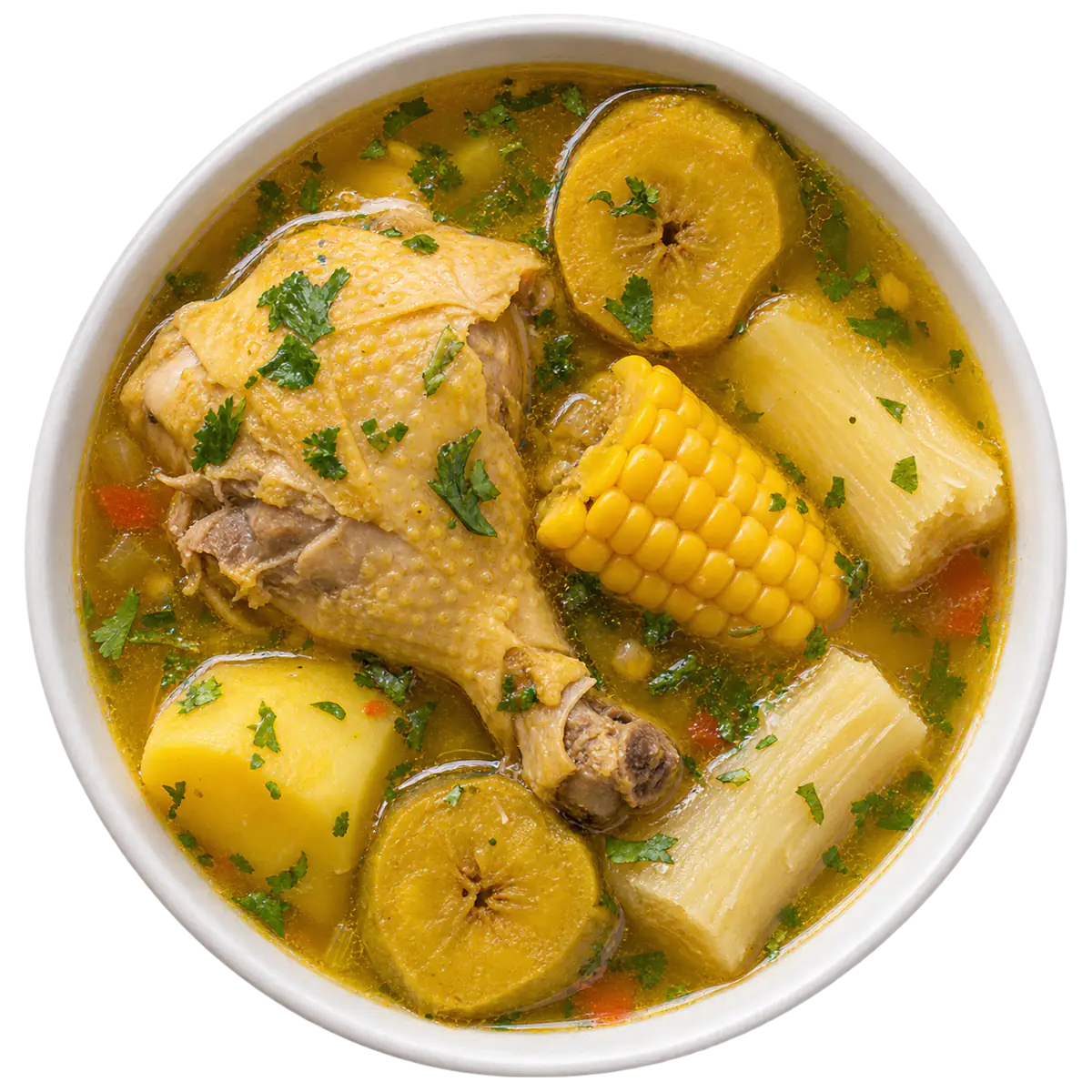
Sancocho made with hen (gallina), usually with plantain, yuca and potato, associated in Colombia with the Valle del Cauca.
Origin and history
Sancocho is cooked across Colombia, where writers describe it as a dish of Spanish origin shaped by African and Indigenous cooking, with each region choosing its own meat. The hen version belongs to the Valle del Cauca: made with a free-range gallina criolla, plantain, yuca and corn, often over a wood fire, it became known nationally and is a home remedy for colds. Panama's emblematic sancocho is the same hen soup built on ñame and culantro.
Make it at home
- Makes
- 6 servings
- Total time
- 2 h 30 min
- Hands-on
- 40 min
Ingredients
- 1 (about 2 kg)1 (about 4.4 lb) hen (gallina criolla), or a free-range chicken, cut into 8 to 10 pieces, skin on
- 3.5 l15 cups water, enough to cover everything generously
- 2 tbsp butter or vegetable oil
- 4 stalks cebolla larga (long green onion) or thick scallions, finely chopped
- 1 small white onion, finely chopped
- 2 tomatoes, finely chopped
- 4 cloves garlic, minced
- 3 ears of corn (mazorcas), each cut into 3 rounds
- 3 (about 900 g)3 (about 2 lb) plátano hartón (plantains), 2 green and 1 half-ripe (pintón), peeled; snap the green ones into chunks by hand
- 700 g1.5 lb yuca (cassava), peeled, woody core removed, cut into large pieces
- 500 g1.1 lb floury potatoes (papa sabanera or russet), optional; peeled and halved (see notes)
- 1/2 tsp ground cumin
- 1/2 tsp azafrán de raíz (ground turmeric) or achiote color, for the golden colour
- 5 leaves cilantro cimarrón (culantro, Eryngium foetidum), or a few extra cilantro stems
- 1 bunch (about 30 g)1 bunch (about 1 oz) fresh cilantro, leaves and tender stems, chopped
- salt and black pepper, to taste
- to serve: white rice, sliced avocado, ají (Colombian chile sauce), lime wedges
Method
-
1. Rinse the hen pieces, pat them dry and rub them with salt, pepper and a spoonful each of the chopped green onion and tomato. Leave them for 20 minutes while you prepare the vegetables.
-
2. Melt the butter in a large, heavy pot over medium heat. Add the rest of the green onion, the white onion, the tomatoes and the garlic and cook, stirring, for about 8 minutes, until soft and jammy.
-
3. Add the hen pieces and turn them in the sofrito for 5 minutes, until the skin turns opaque.
-
4. Pour in the water and bring it to a boil, skimming off the grey foam that rises during the first minutes.
-
5. Add the corn rounds and the green plantain chunks. Lower the heat, partly cover and simmer for about 1 hour, until the hen is almost tender when pierced at the thigh (a farmyard hen may need 30 minutes more; a young chicken needs less).
-
6. Add the yuca, the half-ripe plantain, the potatoes if using, the cumin, the turmeric or achiote and the cimarrón leaves. Season with salt.
-
7. Simmer for another 30 minutes, until the yuca turns translucent and starts to split open and the potatoes break when pressed against the side of the pot.
-
8. For a thicker broth, crush two or three pieces of yuca against the side of the pot and stir them in.
-
9. Take the pot off the heat, stir in most of the chopped cilantro, check the salt and let it rest, covered, for 10 minutes.
-
10. Serve in deep bowls, giving each person a piece of hen, corn, plantain and yuca in plenty of broth, scattered with the remaining cilantro, with rice, avocado and ají on the side.
Notes
- The hen is the point: a gallina criolla (an older, free-range hen) gives a richer broth and firmer meat than a supermarket chicken and needs a longer simmer. With a young chicken, cut the first simmer to about 35 minutes.
- Potatoes are disputed in the Valle del Cauca: many cooks there say the valluno hen sancocho never takes potato, while others add it. Leave them out for the stricter version and use a little more yuca instead.
- Cooking the pot over a wood fire, at a farm or on a river outing, is the classic way in the Valle and gives the broth a smoky edge.
- Cimarrón (culantro) is the herb that makes it taste of the Valle; it is sold as culantro or recao in Latin American and Caribbean shops. Without it, add the cilantro stems with the yuca and keep the leaves for the end.
- Panama's emblematic sancocho is the same hen soup in a sparer form: a farmyard hen, ñame (white yam) instead of plantain and yuca, culantro, oregano and onion, usually served with white rice.
- Like most sancochos it is better made a few hours ahead; reheat gently and add the fresh cilantro just before serving.
- Other sancocho pages on the site: the parent sancocho, sancocho trifásico (three meats) and sancocho de pescado (fish).
Adapted from Sancocho de gallina (Valle del Cauca), Así sabe Colombia, Colombia.com, Erica Dinho, Sancocho de gallina, My Colombian Recipes, and Hablemos de sancochos, El Espectador.
At the festivals
Served at 3 festivals in Colombia and Panama.
Earlier editions
-
July 26, 2026
🇨🇴 Santa Elena, Medellín, Colombia
Festival de Sancochos de Santa Elena
-
January 25, 2026
🇵🇦 Panama City, Panama
XII Feria del Sancocho Panameño
On the menu as Sancocho panameño
By Participating groups
- June 16, 2024