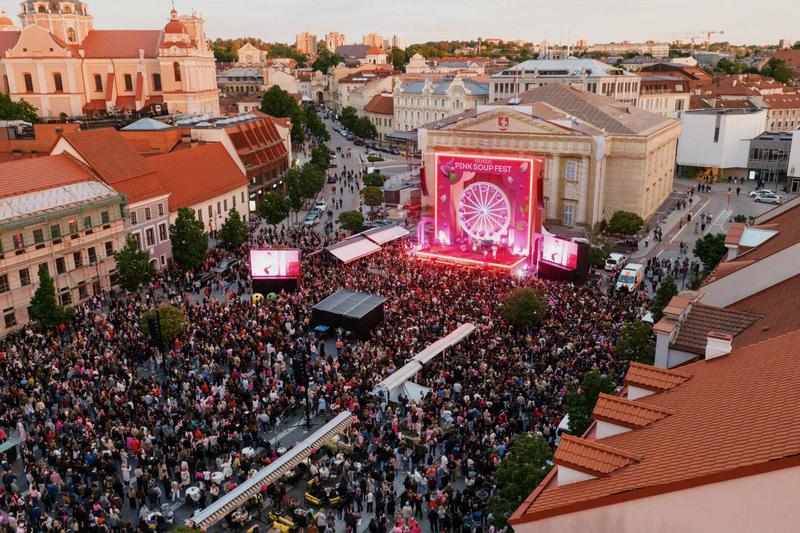
 May 28, 2027 – May 30, 2027
Top pick
Vilnius, Lithuania
5th Vilnius Pink Soup Fest (fifth anniversary)
in 7 months

🇱🇹 Lithuania · former Grand Duchy
Cold pink soup of grated beetroot in kefir or soured milk with cucumber, green onion or dill and hard-boiled egg, served with hot boiled potatoes.
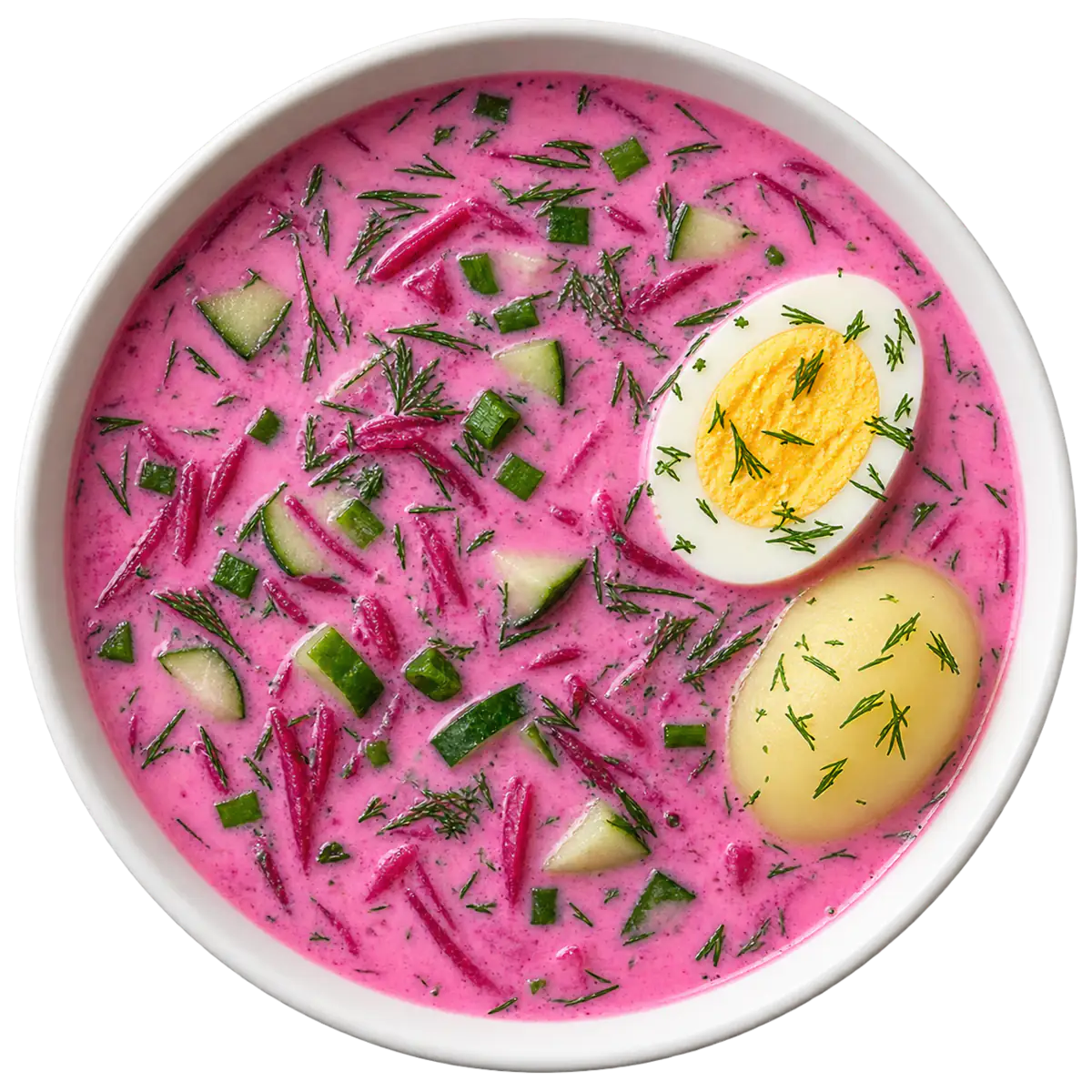
Cold soups of sour leaves were eaten in Lithuania long before beetroot: the historian Rimvydas Laužikas traces them to sorrel- and beet-leaf soups soured with rye, recorded as 'cold soup' by the late 18th century. Fermented milk then became the base and, in the 19th century, beetroot replaced the leaves; the pink soup known today took shape between the world wars. Vilnius now celebrates it with a summer Pink Soup Fest.
1. If using raw beetroot, boil it whole in its skin for 45–60 minutes, until a knife slides in easily, then cool it under cold water and slip off the skin.
2. Grate the cooked beetroot on the coarse side of a box grater, or cut it into fine matchsticks.
3. Put the beetroot, cucumber, spring onion and most of the dill in a large bowl with a pinch of salt and press them lightly with a spoon so they release some juice.
4. Pour in the cold kefir and stir until the soup turns an even, vivid pink.
5. Thin it with the cold water until it pours like single cream, then season with salt and stir in the sour cream if using.
6. Chop two of the eggs and stir them in; halve or quarter the third for the tops of the bowls.
7. Chill the soup for at least 30 minutes so the flavours come together.
8. Shortly before serving, boil the potatoes in salted water for 15–20 minutes, until they break apart when pressed with a fork.
9. Drain the potatoes and toss them with the butter and the remaining dill.
10. Ladle the cold soup into bowls, top with the egg and a little more dill, and serve the steaming potatoes on a separate plate.
Adapted from LRT: Lietuvių šlovinamų šaltibarščių sezonas atidarytas (with historian Rimvydas Laužikas), LRT: Rašytojų šaltibarščių receptai (with Vilnius UNESCO City of Literature), and Draugas News: Cold soups (Šaltibarščiai).
Served at 1 festival in Lithuania.
🇱🇹 Vilnius, Lithuania
On the menu as Šaltibarščiai kitaip: tarptautinė versija, Quick Pink Soup, and šaltibarščiai (pink soup)
By Delano, chefs of foreign restaurants operating in Vilnius, chefs of foreign restaurants, URBAN FOOD, and Dozens of food stall vendors
🇱🇹 Vilnius, Lithuania
On the menu as šaltibarščių variacijos, šaltibarščiai su lašiša, šaltibarščiai (virtual, in Cooking Fever), and plant-based šaltibarščiai
By vendors zone at Tymo turgus, restaurants across Vilnius, Restaurants and street food stalls, Many Vilnius cafés and restaurants, Cafés and restaurants, Nordcurrent, in the mobile game Cooking Fever, and restaurants
🇱🇹 Vilnius, Lithuania
On the menu as Lokys' version of šaltibarščiai
By over 100 partners, including restaurants, cafes, pubs, nightclubs and Lokys restaurant (chef Rita Keršulytė-Ryčkova)
Two Lithuanian records set: longest šaltibarščiai table (362 m) and most people eating pink soup at once (1,200 seated, per Go Vilnius and the Lithuanian Records Book 2025).
🇱🇹 Vilnius, Lithuania
On the menu as The spiciest šaltibarščiai in Lithuania and aštriausi šaltibarščiai Lietuvoje
By food wagons in the Tymo Market area; Vilnius restaurants and bars, More than 30 restaurants in the capital, Food wagons at Tymo turgus, more than 30 Vilnius restaurants; a record-size pot at Tymo Market, Food wagons at Tymo Market, food wagons at Tymo Market; city-centre restaurants and bars, Halės turgus (Hales Market), and Halės turgus
Best šaltibarščių costume prizes at the slide contest (main prize: a hot-air balloon flight); a spiciest-šaltibarščiai contest at Tymo turgus; winners' names not found.