
🇯🇵 Japan · recorded in Edo, now Tokyo
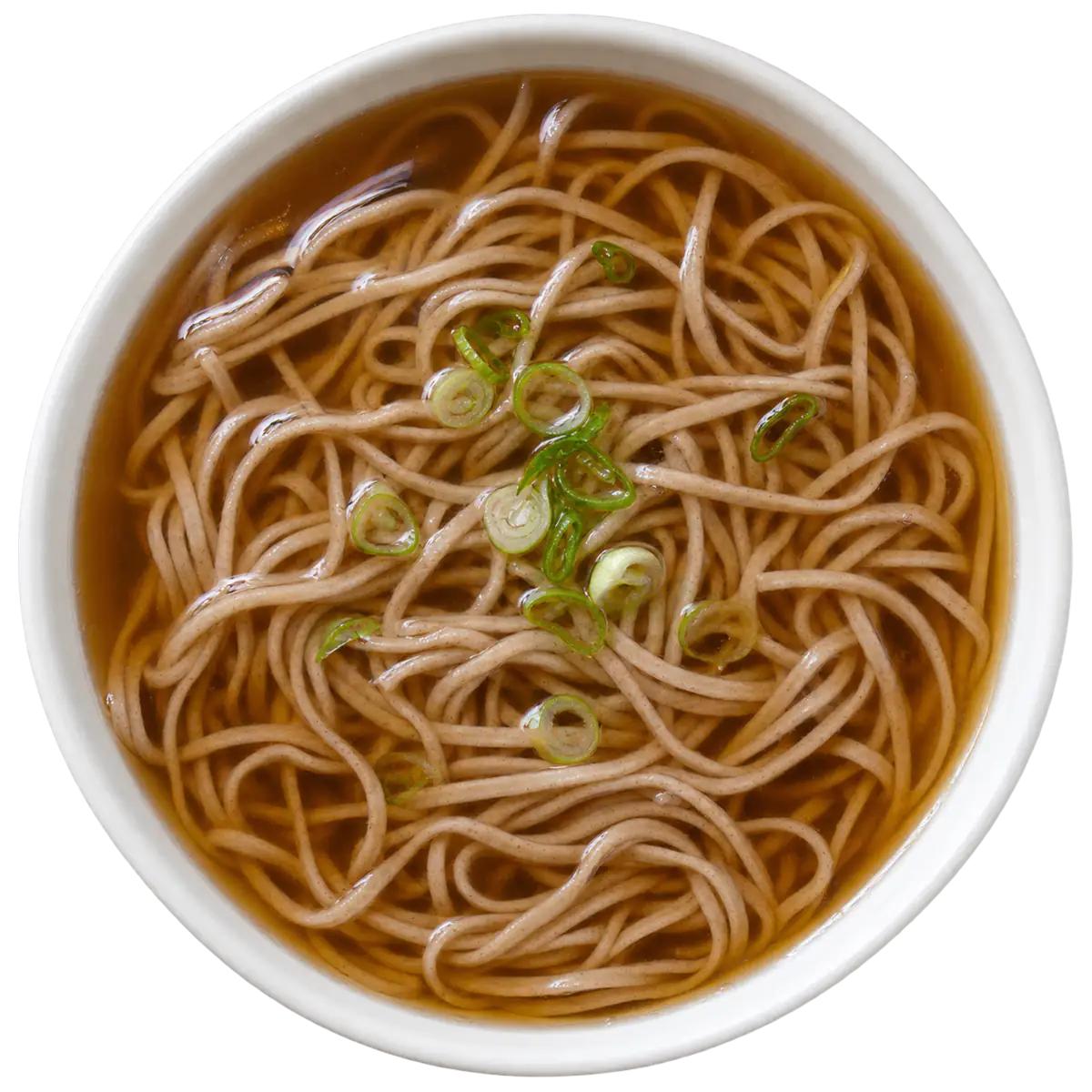
Kake sobaJapanese hot buckwheat noodle soup
Buckwheat noodles served in a bowl of hot, clear broth made from dashi, soy sauce and mirin, usually with a simple topping.
Origin and history
Soba shops existed in Edo from the mid-1600s, when the city had many single men such as migrant laborers and samurai on attendance duty; many were late-night stalls. According to a popular account in Bunshun, busy Edo craftsmen devised bukkake soba, with the broth poured over the noodles, in the Genroku era (1688-1704), which gave rise to kake soba. That is a tradition, not a documented fact.
Make it at home
- Makes
- 4 servings
- Total time
- 1 h 45 min
- Hands-on
- 30 min
Ingredients
- 1.2 L5 cups water, for the dashi
- 10 g1/3 oz dried kombu, wiped with a damp cloth
- 80 g2 3/4 oz katsuobushi (dried bonito flakes), thick-cut if possible
- 120 ml1/2 cup mirin, 8 tablespoons
- 120 ml1/2 cup soy sauce, 8 tablespoons
- 400 g14 oz dried soba noodles, 100 g per person
- 40 cm16 in long green onion (negi), sliced in thin rounds
- fried tofu (aburaage), tempura bits, egg or kamaboko, optional toppings
- shichimi pepper or wasabi, optional, at the table
Method
-
1. Put the water and the kombu in a pot and leave for about 1 hour.
-
2. Heat the pot over low heat. Just before it boils, take out the kombu. When it simmers, add the katsuobushi and cook gently for 5 minutes.
-
3. Line a sieve with a paper towel and strain the dashi into a bowl.
-
4. In a clean pot warm the mirin and soy sauce over low heat and simmer for 2 minutes. Add the dashi, raise the heat to medium and switch off as soon as it boils. This is the kake broth; keep it hot.
-
5. Boil the soba in plenty of water for the time on the packet.
-
6. Rinse the noodles well under cold water to wash off the surface slime and drain.
-
7. Warm the noodles in hot water for about 10 seconds, drain thoroughly and divide among deep bowls.
-
8. Pour the hot broth over the noodles, add the green onion and any other topping, and serve immediately before the noodles soften.
Notes
- Kake soba is soba served in a bowl with hot broth poured over it. The cold forms (mori in a basket, zaru) come with a dipping sauce and are different dishes. Bunshun notes that a broth poured over the noodles is usually a little lighter in seasoning than a dipping tsuyu, with a more pronounced dashi flavor.
- Rinsing the boiled noodles to wash off the surface slime, then reheating them in hot water for about 10 seconds just before serving, keeps the noodles firm and the broth clear.
- Kanto broth is stronger, made with bonito dashi and dark soy sauce; Kansai broth is lighter, often kombu dashi with light soy sauce (HugKum). This recipe uses equal parts soy sauce and mirin; adjust to taste, or thin the broth with a little more dashi.
- Common toppings include kitsune (fried tofu), tanuki (tempura bits), tempura, grated daikon, nameko mushrooms and kamaboko. Green onion is the basic topping; at New Year's Eve it is eaten partly because its name sounds like the word for thanking someone for hard work (HugKum).
Adapted from Delish Kitchen, Kake soba tsuyu (dashi and seasoning proportions), HugKum (Shogakukan), Kake soba and New Year's Eve soba toppings, and Nippon.com, History of soba in Edo.
At the festivals
No festival we list has printed it on a menu yet.