
🇯🇵 Japan · Sanuki udon of Kagawa is the best-known regional style
UdonJapanese wheat noodle soup
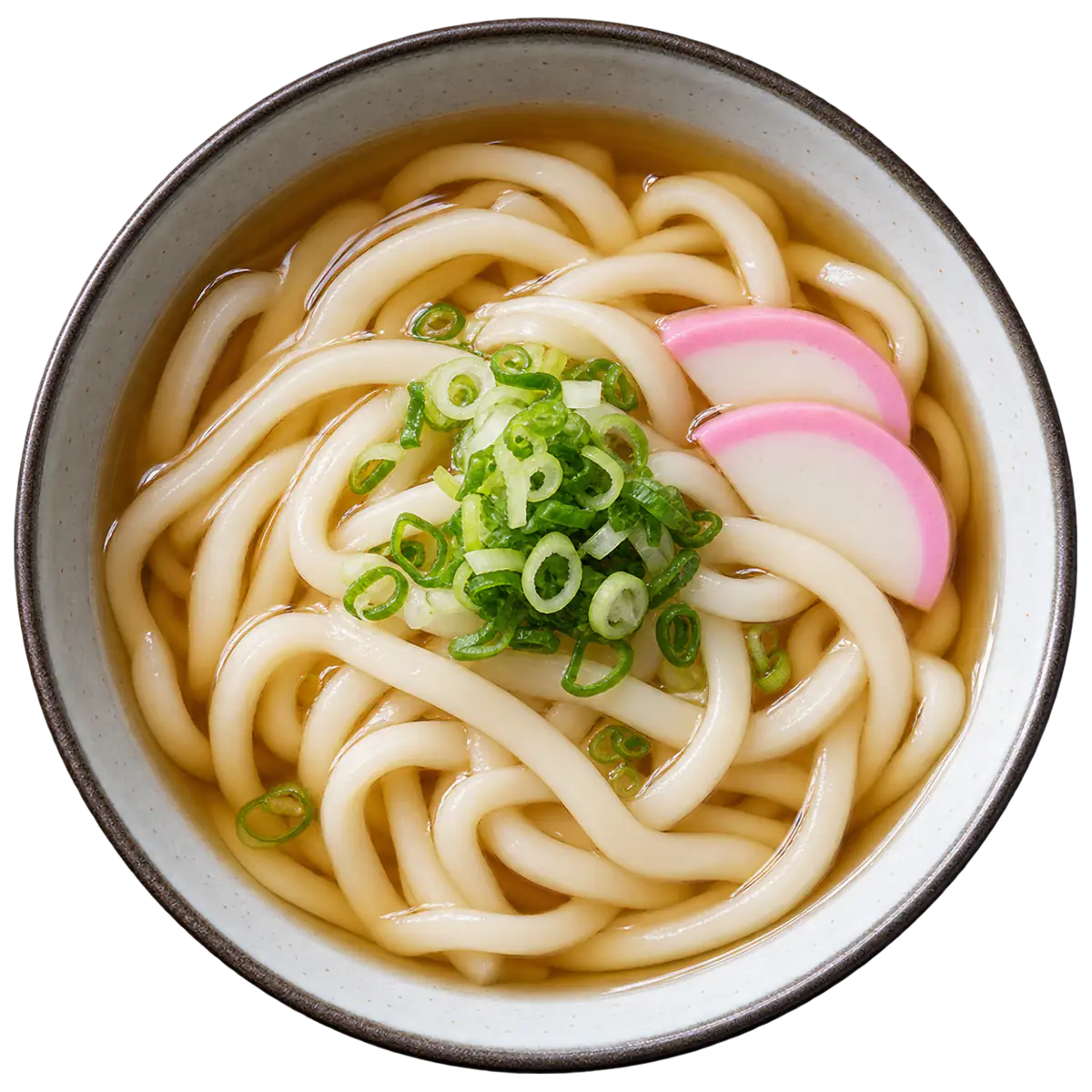
Thick Japanese wheat noodles of flour, water and salt served hot in a dashi and soy broth; the plain bowl is kake udon, dressed with toppings such as fried tofu, egg or tempura.
Origin and history
Udon is a thick noodle of wheat flour, water and salt whose origin is not settled. Japan's agriculture ministry tells the story of the monk Kukai bringing it from China as a tale rather than fact, beside a theory that it arrived with the envoys to Sui and Tang China; Edo-period udon shops existed, and one source says it was long a temple food before becoming popular outside temples in the Edo period. Sanuki udon of Kagawa is the best-known regional style.
Make it at home
- Makes
- 4 servings
- Total time
- 35 min
- Hands-on
- 25 min
Ingredients
- 1.2 L5 cups water
- 15 g1/2 oz kombu, about a 10 cm (4 in) piece, wiped
- 25 g1 oz katsuobushi (bonito flakes), a large handful
- 4 tbsp light soy sauce (usukuchi), regular soy sauce also works
- 3 tbsp mirin
- 1/2 tsp salt, to taste
- 4 portions udon noodles, about 200 g (7 oz) each fresh, or frozen; dried needs longer cooking
- 2 aburaage (fried tofu pouches), for kitsune udon
- 2 tbsp soy sauce, for simmering the aburaage
- 1 tbsp sugar, for simmering the aburaage
- 3 scallions, thinly sliced
- narutomaki, shichimi togarashi or grated ginger, optional, to serve
Method
-
1. Soak the kombu in the water for 30 minutes if you have time, then heat slowly and remove it just before the water boils.
-
2. Add the bonito flakes, bring to a bare simmer for 1 minute, turn off the heat and let them sink, then strain through a fine sieve.
-
3. Return the dashi to the pot, add the soy sauce, mirin and salt, and taste; it should be clear, savoury and gently sweet.
-
4. For the topping, pour boiling water over the aburaage to remove surface oil, cut each in half, and simmer in 150 ml (2/3 cup) of the dashi with the soy sauce and sugar for 8 minutes.
-
5. Boil the udon in a large pot of unsalted water according to the packet, until chewy with no hard core; fresh takes 2 to 3 minutes, frozen about 1 minute.
-
6. Drain the noodles and rinse briefly under hot water to remove surface starch.
-
7. Divide the noodles between warm bowls, ladle over the very hot broth and top with aburaage and scallion. Serve at once.
Notes
- This is kake udon, the plain hot bowl; the toppings name the bowl: kitsune (fried tofu), tsukimi (an egg 'moon'), tanuki (tempura crumbs), kare (curry). Zaru udon, served cold with a dipping sauce, is not a soup and is outside this page.
- Regional styles: Kanto broth is dark and soy-heavy; Kansai broth is clearer and paler, often with finer noodles. In Kagawa, Sanuki udon is thick and springy and its broth is made with iriko (dried sardines), which you can use instead of bonito.
- Without kombu and bonito, a good instant dashi powder works with a little less soy sauce.
- Cook the noodles separately, never in the broth, or it turns cloudy. Make ahead: the dashi keeps 3 days.
Adapted from Ministry of Agriculture, Forestry and Fisheries (Japan), Sanuki udon feature and Japan Experience, Udon noodles.
At the festivals
No festival we list has printed it on a menu yet.