
🇮🇹 Italy · Tuscany
RibollitaTuscan bread soup
A Tuscan bread-and-vegetable soup of cannellini beans, cavolo nero (lacinato kale) and other vegetables, originally made by reheating (ri-bollita, 'reboiled') leftover minestrone with stale bread.
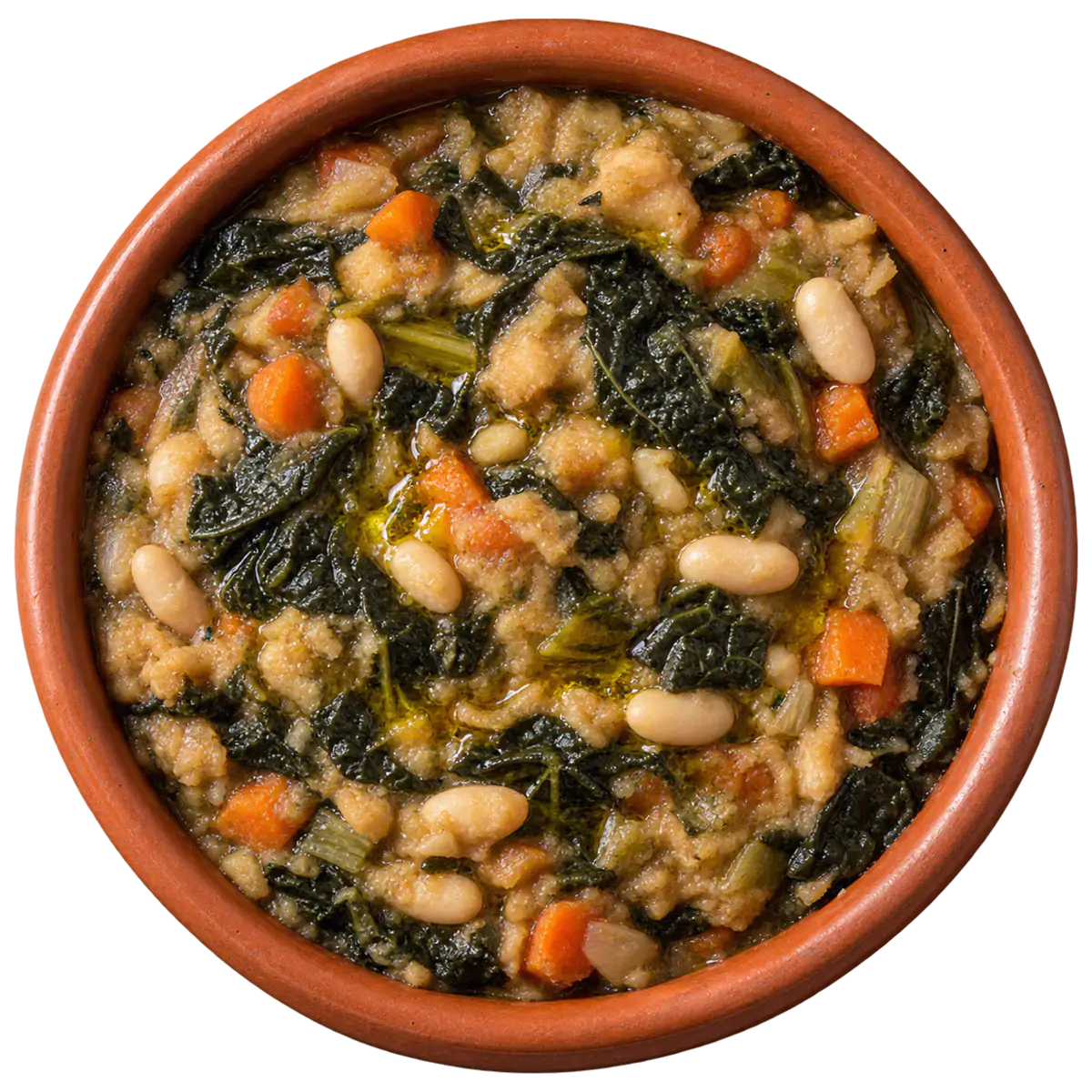
Origin and history
Ribollita is the reheated form of the Tuscan peasant soup of beans, black cabbage, greens and stale bread. Pellegrino Artusi printed it in 1891 as 'zuppa toscana di magro alla contadina'; families cooked a large pot on Friday, the meatless day, and reboiled it through the weekend. Alberto Cougnet advised reboiling it in 1910. On 24 May 2001 the Florence delegation of the Accademia Italiana della Cucina deposited its recipe with a notary.
Make it at home
- Makes
- 6 servings
- Total time
- 3 h
- Hands-on
- 1 h
Ingredients
- 300 g1 1/2 cups dried cannellini beans, or 800 g (4 1/2 cups) cooked beans plus 2 l (8 1/2 cups) water or light broth
- 1/2 onion, 1 celery stalk and 1 garlic clove, for cooking the beans
- 90 ml6 tbsp extra virgin olive oil, plus more to finish
- 1 onion (red or white), finely chopped
- 2 garlic cloves, finely chopped
- 2 carrots, diced
- 1 celery stalk, diced
- 2 potatoes, peeled, diced
- 300 g10 oz cavolo nero (Tuscan black kale, lacinato), central ribs removed, cut in strips
- 250 g9 oz Savoy cabbage (verza), cut in strips
- 150 g5 oz Swiss chard (bietola), cut in strips
- 2 canned peeled tomatoes, chopped; or 1 tbsp tomato paste
- 300 g10 oz stale Tuscan bread (pane toscano, unsalted), or other firm, plain country bread, thinly sliced
- 1 sprig fresh thyme
- salt and black pepper, to taste
Method
-
1. Day one: soak the beans in plenty of cold water for at least 12 hours.
-
2. Day two: drain the beans, put them in a pot with 2.5 l (10 1/2 cups) fresh water, the half onion, celery stalk and garlic clove. Simmer gently, half-covered, for 1-1 1/2 hours until creamy and tender. Salt them only at the end. Keep the beans and all their cooking liquid; discard the aromatics.
-
3. In a large heavy pot (earthenware is traditional), warm the olive oil over medium heat and cook the chopped onion, garlic, carrots and celery for about 10 minutes, until soft but not browned.
-
4. Add the potatoes, then the cavolo nero, Savoy cabbage and chard, and stir until the greens wilt.
-
5. Add the tomatoes and enough bean cooking liquid to cover the vegetables. Season with salt and pepper, cover and simmer gently for 45 minutes, adding more liquid if needed.
-
6. Purée about two-thirds of the beans with a ladle of their liquid and stir them into the pot. Simmer for 30 minutes more, stirring often so it does not catch.
-
7. Add the remaining whole beans and check the salt. The soup should be thick but still pourable.
-
8. In a deep pot or tureen, layer slices of bread and ladles of soup until both are used up. Leave to cool, then cover and refrigerate overnight.
-
9. Day three (or that evening): put the soup and bread back on low heat and bring it slowly to the boil, stirring gently, for 10-15 minutes, until the bread has broken down and the soup is thick enough to hold a spoon. This reboiling is what makes it ribollita.
-
10. Serve warm, not piping hot, with a generous thread of raw olive oil, freshly ground pepper and a few thyme leaves on each bowl.
Notes
- Total time: about 3 h of cooking, spread over two days: the beans soak overnight, and the soup rests overnight before it is reboiled.
- Cavolo nero is the one green ribollita cannot do without. Tuscan cooks prefer it after the first frosts, when it is tender and sweet. Curly kale is a fallback, with a coarser texture.
- Toscanelli or borlotti beans are used in some homes instead of cannellini. Canned beans work, but use water or a light broth instead of the bean liquid and the soup will be less creamy.
- The bread soup can be eaten on the day it is assembled; strictly, it only becomes ribollita when reheated.
- Every part of Tuscany has its own version. Artusi's earlier recipe cooks strips of ham or cured pork rind with the beans, puts parsley in the soffritto and adds a little wild thyme (pepolino) with the greens.
- Non-Tuscans often toast the bread first. Unsalted Tuscan bread is traditional; salted bread means using less salt in the soup.
- Ribollita keeps 3 days in the fridge and improves with each reheating. Related Tuscan bread soups: acquacotta, pappa al pomodoro.
Adapted from Pellegrino Artusi, La scienza in cucina e l'arte di mangiar bene (1891), No. 58 "Zuppa toscana di magro alla contadina", Dissapore, "Ribollita: la ricetta originale toscana", and Visit Tuscany (Juls' Kitchen), "La ricetta della ribollita toscana".
At the festivals
Served at 4 festivals in Italy and Germany.
Earlier editions
- October 09, 2026
-
July 17, 2026 – July 19, 2026
🇮🇹 Roccastrada, Italy
Sagra della Ribollita di Ribolla
-
July 17, 2026 – July 19, 2026
🇮🇹 Loro Ciuffenna, Italy
Sagra della Ribollita di San Clemente in Valle
-
July 15, 2022
🇮🇹 Loro Ciuffenna, Italy
Sagra della Ribollita di San Clemente in Valle
-
February 24, 2018
🇩🇪 Marburg, Germany
13. Internationales Marburger Suppenfest
On the menu as Ribollita Toscana
By Il Ponte Verein