
🇮🇹 Italy · Tuscany, chiefly Lucca and Capannori (also recorded near Arezzo, 1969 Touring Club guide)
Zuppa alla frantoianaTuscan bean soup
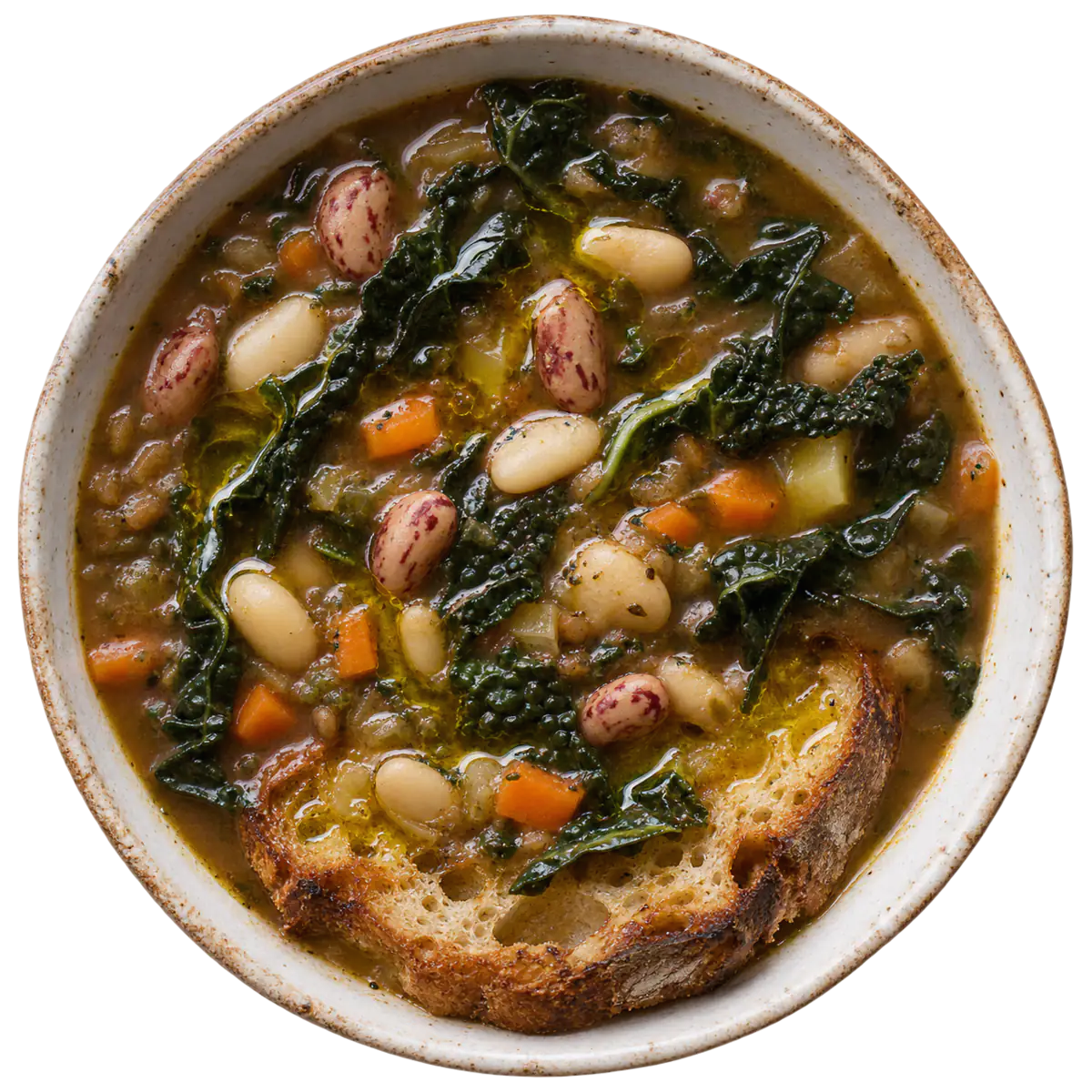
A Lucchesia bean-and-vegetable soup (borlotti or other beans, cavolo nero or 'braschetta', seasonal vegetables) made at olive-pressing time and finished with new extra-virgin olive oil, usually over stale bread.
Origin and history
A bean and vegetable soup of the Lucca plain and hills (chiefly Lucca and Capannori). Its name ties it to the frantoio: it was made with the vegetables of the olive-pressing season and dressed with the new oil, and in the Compitese it was cooked in the mills for the olive workers. The 1969 Touring Club gastronomic guide records a frantoiana in the Arezzo area too. In Lucca it has had a revival, with the Disfida della zuppa, a winter contest of home and professional cooks.
Make it at home
- Makes
- 6 servings
- Total time
- 3 h 30 min
- Hands-on
- 1 h
Ingredients
- 400 g14 oz (2 cups) dried red beans: fagioli rossi di Lucca, or borlotti; a mix with cannellini is common, soaked overnight in cold water
- 1 sage sprig and 1 garlic clove, for the beans
- 150 ml2/3 cup extra virgin olive oil, for cooking
- 1 red onion, chopped
- 2 carrots, chopped
- 2 celery stalks, chopped
- 2 garlic cloves, chopped
- 1 leek, sliced
- 1 small bunch flat-leaf parsley, chopped
- 1 small bunch pepolino (wild thyme) or ordinary thyme, leaves only
- 1/2 tsp fennel seeds
- 1 small dried chilli (peperoncino), crumbled, optional
- 500 g1.1 lb cavolo nero (braschetta in Lucca), ribs removed, leaves cut in strips
- 300 g10 oz savoy or white cabbage, shredded
- 200 g7 oz chard or wild greens (borage, cicerbita) when available, chopped
- 200 g7 oz winter squash (zucca), peeled, diced
- 2 potatoes, peeled, diced
- 1.5-2 l6-8 cups bean cooking water plus water
- salt and black pepper, to taste
- 400 g14 oz stale unsalted Tuscan bread (pane toscano or pane di Altopascio), two or three days old, sliced or in large cubes
- olio nuovo (newly pressed extra virgin olive oil), for finishing, generously
Method
-
1. Drain the soaked beans, put them in a pot with the sage and a garlic clove, cover with fresh cold water by about 5 cm (2 in) and bring slowly to a simmer.
-
2. Cook the beans gently, partly covered, for 1 1/2-2 hours, until they are creamy inside. Salt them only at the end. Keep the cooking water.
-
3. Lift out about two thirds of the beans and pass them through a food mill (or blend them) with a little of their water to a smooth purée. Keep the remaining beans whole.
-
4. In a large heavy pot, warm the cooking olive oil over medium-low heat and soften the onion, carrot, celery, garlic, leek, parsley, thyme, fennel seeds and chilli for about 15 minutes, until soft and fragrant but not browned.
-
5. Add the cavolo nero, cabbage, chard and any wild greens a handful at a time, stirring until each batch wilts.
-
6. Add the squash and potatoes, then the bean purée and enough bean water and plain water to make a loose soup.
-
7. Simmer gently, covered, for about 1 hour, stirring now and then, until the cabbage is very tender and the squash has started to melt into the broth. Add the whole beans for the last 15 minutes and season with salt and pepper.
-
8. Lay the stale bread in a tureen or in deep bowls and ladle the hot soup over it.
-
9. Leave it to rest for 10 minutes, until the bread has drunk the broth and softened but still holds together.
-
10. Serve with a generous pour of new olive oil over each bowl and a grind of black pepper.
Notes
- Total time: 3 h 30 min, plus overnight soaking.
- The soup is named for the frantoio, the olive mill: it is made from what the garden and fields give at pressing time (November to March) and finished with oil that has just come out of the press, green, bitter and peppery. Any young, peppery extra virgin oil is the closest substitute; a mild oil gives a flatter soup.
- Every Lucca household and village has its own version. In the Compitese several local beans go in together (scritti di Lucca, cannellino di San Ginese, rosso di Lucca) and cavolo nero dominates; at Santa Maria del Giudice the 'paesana' relies on savoy cabbage, potatoes and wild herbs from the dry slopes of Monte Penna; the Aquilea version is a meatless 'frantoiana di magro' rich in wild herbs.
- Some cooks once simmered a piece of pork rind, a pig's trotter or a prosciutto bone in the pot for richness; others add a spoonful of tomato concentrate. Both are optional.
- Fagioli rossi di Lucca are a Slow Food Presidium bean; borlotti are the usual substitute and give a similar sweet, creamy result.
- Like most Tuscan bread soups it is better the next day, and it is also eaten lukewarm or cold. Reheat gently and add the bread and new oil only when serving.
- Related Tuscan soups: ribollita (reboiled bean and cavolo nero soup) and acquacotta.
Adapted from Visit Tuscany (Regione Toscana), "La ricetta della zuppa alla frantoiana" and Cristina Sorbi, "La zuppa: sapori, culture, specchio del territorio", Master in Storia e cultura dell'alimentazione, Università di Bologna.
At the festivals
Served at 1 festival in Italy.
Earlier editions
-
July 04, 2026
🇮🇹 Capannori, Italy
Sagra della Zuppa alla Frantoiana