
🇪🇸 Spain · Galicia
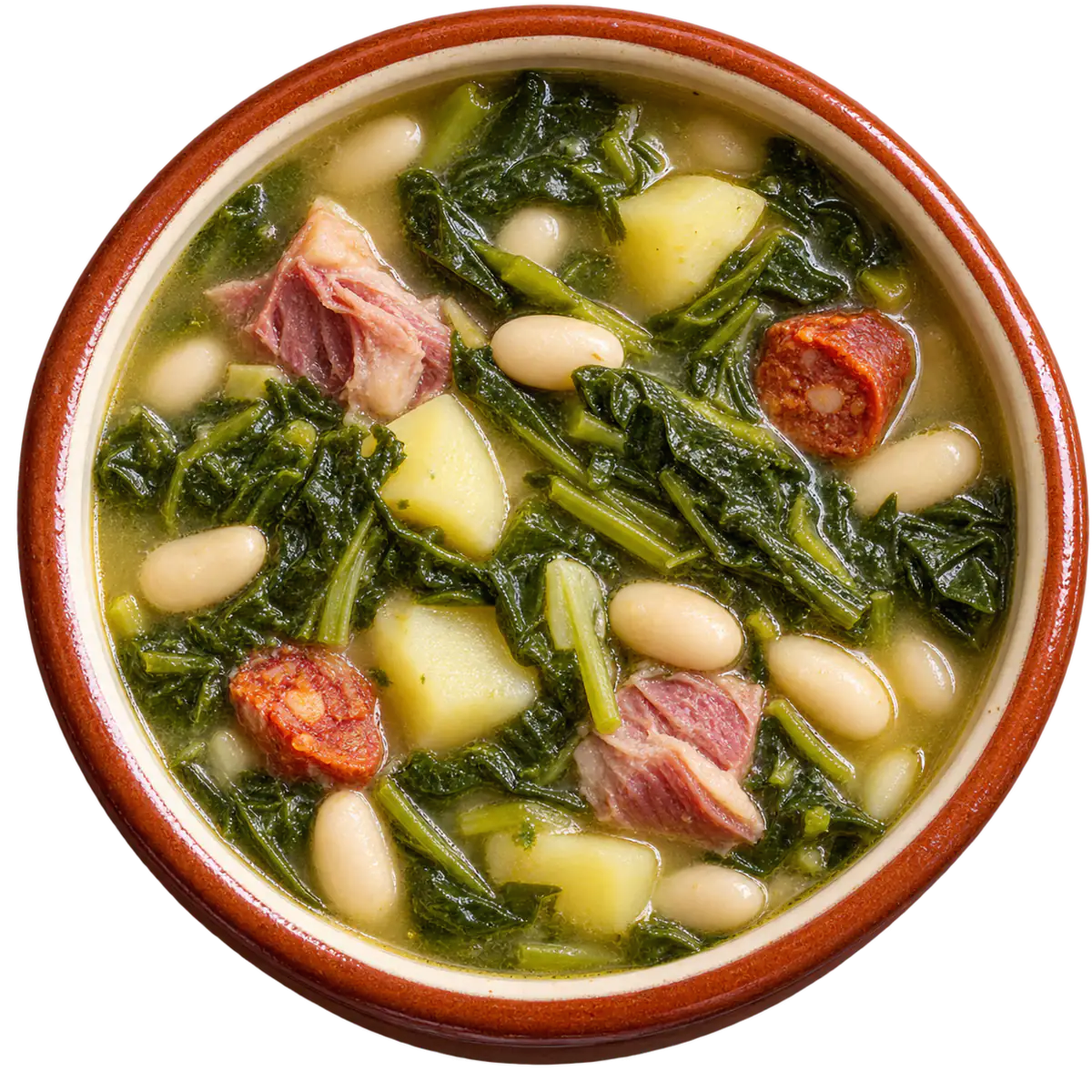
Caldo gallegoGalician bean and greens soup
A Galician soup of white beans, potatoes and turnip tops or other greens cooked with cured pork, notably lacón and unto (cured pork fat). Beans and meats cook first; potatoes and greens go in later.
Origin and history
Caldo was the daily food of rural Galicia. The Archive of the Kingdom of Galicia describes the 18th-century peasant diet as cereals eaten as bread or porridge and, above all, a caldo of berza greens with a little unto, with pork only rarely. Potatoes, beans and cured meats such as lacón later made it richer, and it remains the region's emblematic winter dish, with the green changing through the year.
Make it at home
- Makes
- 6 servings
- Total time
- 2 h 30 min
- Hands-on
- 30 min
Ingredients
- 150 g5 oz (3/4 cup) dried white beans (fabas or alubias blancas), soaked overnight in plenty of cold water
- 400 g14 oz lacón (Galician cured pork shoulder) or salted pork ribs, desalted in cold water for 24 hours, changing the water once or twice
- 2 beef marrow bones (huesos de caña) or a piece of pork backbone (espinazo)
- 40 g1.5 oz unto (Galician cured pork fat), wiped clean with kitchen paper
- 3 L3 qt (12 1/2 cups) cold water
- 800 g1.75 lb floury potatoes (about 4 medium), peeled
- 1 kg2.2 lb grelos (turnip tops) or nabizas (young turnip greens); or berza (collard or cabbage greens), washed, tough stems removed
- 1 (optional) chorizo
- salt, to taste, at the end
Method
-
1. The day before, put the beans to soak and the lacón to desalt, each in plenty of cold water.
-
2. Put the lacón, the bones and the unto in a large pot with the 3 L (3 qt) of cold water and bring slowly to the boil.
-
3. Skim the foam, lower the heat and simmer gently for 1 hour.
-
4. Add the drained beans (and the chorizo, if using) and simmer for 30–45 minutes, until the beans are just starting to soften.
-
5. Meanwhile, blanch the greens in a separate pan of boiling water for 2–3 minutes to take away their bitterness, then drain and chop them roughly.
-
6. Cut each potato part of the way through with a knife and snap the piece off ('chascar'), so the chunks have rough edges that release starch into the broth.
-
7. Add the potatoes and greens to the pot and simmer for 25–30 minutes, until the potatoes are tender and the greens are soft.
-
8. Lift out the unto, the bones and the meats; mash a ladleful of beans and potato against the side of the pot and stir them back in to give the broth body.
-
9. Taste and add salt only now, because the lacón and unto are salty.
-
10. Let the caldo rest, covered, for at least 15 minutes, ideally until the next day, then reheat it.
-
11. Serve very hot in deep bowls, with the lacón and chorizo sliced on the side or torn into each bowl.
Notes
- Total time: 2 h 30 min, plus overnight soaking.
- Unto is what makes the caldo Galician: it gives the broth its typical flavour and pale, cloudy colour. Outside Galicia, salt pork or tocino is the usual substitute; the soup is good but loses that slightly rancid, deep note, so use only a little.
- The green changes with the season: nabizas in autumn, grelos (the flowering shoots) in late winter and spring, and berza or cabbage the rest of the year. Turnip tops, collard greens or savoy cabbage all work outside Spain.
- Every household doses meat differently: some use only pork bones and unto, others add lacón, chorizo, pork rib, ear or a piece of beef. The beans are sometimes left out, especially when the caldo is made with cabbage.
- In Galicia caldo is served as a first course, often followed by the meats from the pot.
- It tastes better the next day. It keeps 3 days in the refrigerator.
- Caldo gallego is related to Portuguese caldo verde, which has no beans or unto and is built on a potato purée with finely shredded kale.
Adapted from Real Academia de Gastronomía: Caldo gallego, Asociación de Escritoras e Escritores en Lingua Galega: Receita tradicional galega, caldo de grelos, and Público: Receta de caldo gallego.
At the festivals
Served at 3 festivals in Spain.
Earlier editions
-
August 14, 2026
🇪🇸 Viana do Bolo, Spain
III Festa do Caldo
-
March 07, 2026
🇪🇸 Pontevedra, Spain
XXXIV Festa do Caldo Galego
On the menu as Cunca de caldo gallego and Caldo galego
-
August 14, 2024
🇪🇸 Viana do Bolo, Spain
I Festa do Caldo
-
March 11, 2023
🇪🇸 Pontevedra, Spain
XXXI Festa do Caldo Galego
On the menu as Caldo galego
By Asociación de Veciños O Castro
-
February 15, 2020
🇪🇸 Fene, Spain
II Festa do Caldo Galego
On the menu as caldo galego
By Cooked by the directors of the casino of Perlío